1000 Days of Building the Bridge
Our goal isn't just to grow Inkblot. It's to demonstrate that there's a better way to approach creative-technical collaboration and to share what we learn along the way.
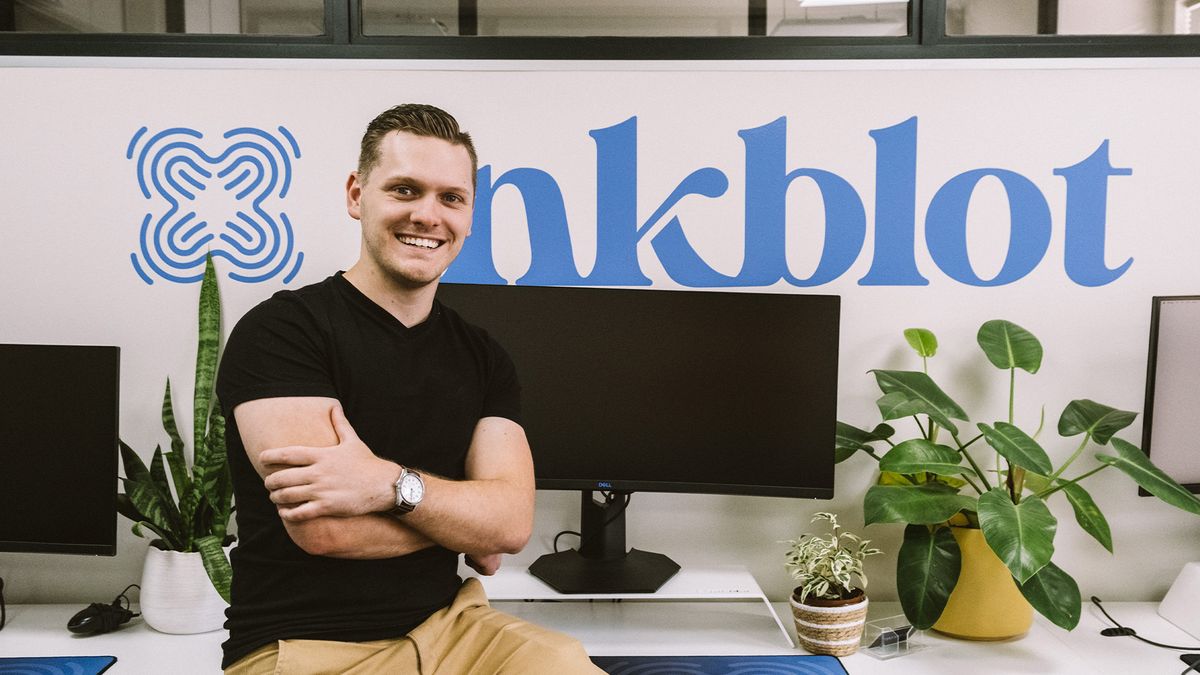
On 22 October 2025, Inkblot turned 1000 days old.
Not three years. Not "a few years". Exactly 1000 days.
This number carries weight. Especially in the startup world. Research shows that 70% of startups fail between years two and five – with the 1000-day window being the most critical period. It's the "make or break" threshold where businesses either establish sustainable foundations or succumb to the challenges that claim most ventures.
We made it through. And looking back at these 1000 days, the reason we started Inkblot matters more than ever.
The moment everything clicked (or rather, broke)
It was an unholy hour of the night, and I was staring at a Figma file that might as well have been a logo in a Word doc.
I'd been a software engineer for a few years at that point, used to translating complex requirements into working code. But this particular design handoff? It was beautiful. Pixel-perfect. Completely unbuildable.
Here's what was actually happening in that coding session (and thousands of others like it): a brilliant designer had created something incredible, and a capable developer was trying to build it. But somewhere between creative vision and technical reality, everything got lost in translation.
The result?
- Meetings to clarify what "smooth" meant
- Three different interpretations of the same interaction
- A launch date that kept sliding further away
- A final product that looked... fine. But not like the original vision.
I started tracking this pattern across projects. The numbers were sobering:
- Consistently more development time than estimated
- Countless revision cycles that could have been prevented
- Designers frustrated that their vision got "butchered"
- Developers frustrated by designs that ignored technical constraints
The expensive part? None of this was anyone's fault. It was a systematic translation problem that the entire industry had just... accepted.
And I'd accepted it too, until I hadn't.
After enough of these late-night coding sessions, I started seeing a pattern. Not just across projects, but across the entire industry. The design-development handoff was fundamentally broken – not because people weren't talented, but because no one was systematically bridging the gap.
The lightbulb moment
After yet another project where beautiful designs became okay websites, I had what you might generously call an epiphany.
What if the problem wasn't that designers don't understand development or that developers don't appreciate design? What if the problem was that no one was speaking both languages fluently?
Traditional design agencies hand over beautiful static files and hope for the best. Development teams receive these files and start the expensive guessing game.
But what if there was a translation layer? Someone who could speak fluent "designer" and fluent "developer" and ensure nothing got lost between the two?
That's why I built Inkblot.
What we actually do
We don't just design interfaces. We create what we call "Complete Blueprints". Design packages that include everything developers need to build exactly what was designed:
- Component specifications that leave nothing to interpretation
- Interaction details that developers can implement confidently
- Edge case documentation that prevents "what happens when..." conversations
- Technical annotations that save hours of back-and-forth
Why this matters beyond our bank account
This isn't just about Inkblot building a better business model. It's about fixing a broken industry standard that costs everyone time, money, and creative integrity.
Every time a developer has to guess what a designer intended, innovation suffers. Every time a beautiful design gets compromised because no one considered implementation, user experience suffers. Every time a project goes over budget because of preventable friction, smaller companies get priced out of good design.
We believe better design-development collaboration makes better products accessible to more people.
What we're really building
Inkblot isn't just another design agency. We're building proof that the design-development divide isn't inevitable. We're demonstrating that when creative vision meets technical reality intentionally -- rather than accidentally -- the results are better for everyone.
For clients: Smoother projects, better outcomes, investment protection
For developers: Clear specifications, fewer surprises, work they're excited to build
For the industry: Higher standards, better collaboration, innovation through integration
Why now, why us, why here
The South African tech industry is at an inflection point. We have incredible technical talent, growing creative industries, and the opportunity to build something world-class without the baggage of "how things have always been done".
Starting Inkblot here means we can establish these standards from the ground up, create local success stories, and export our approach to markets that desperately need this kind of systematic collaboration.
What 1000 days taught us
The research on startup survival talks about three distinct phases in the first 1000 days:
Days 1-365: Foundation: Getting customers and generating cash for survival
Days 366-730: Testing: The period when many businesses fail, testing and refining the model
Days 731-1000: Scaling: Moving beyond survival towards sustainable growth
Looking back, we experienced all of it. The early days of proving that Complete Blueprints weren't just theory but actually worked in practice. The testing phase where we refined our methodology with each project, learning what developers truly needed. And now, the scaling phase, where we're not just surviving, we're demonstrating that there's a better way.
But here's what the statistics don't capture: those 1000 days weren't just about business survival. They were about validating that the founding vision was right. That the design-development divide isn't inevitable and that speaking both languages fluently actually solves real problems for real people.
What's next?
Reaching 1000 days isn't the finish line. It's proof that the foundation is solid enough to build something bigger.
We're not done building this bridge. Every project teaches us something new about design-development integration. Every client relationship deepens our understanding of what businesses actually need from creative services.
Our goal isn't just to grow Inkblot. It's to demonstrate that there's a better way to approach creative-technical collaboration and to share what we learn along the way.
"At the end of the thousand days, you will have 1000 days of experience."
And that experience, those 1000 days of practising this bridge-building daily, is exactly what transforms a good idea into a sustainable business.
1000 days of experience. 1000 days of proof. 1000 days of Inkblot.
Here's to the next 1000 days of building better bridges.
—Jonathan de Kock
(founder and CEO of Inkblot Design)

About Jonathan de Kock
Can fly a literal plane. Real-life child coding prodigy. Was responsible for the garden club in high school and it shows (i.e., he helps us grow to our fullest potential).