Every logo is an inkblot
Whether intentional or not, every logo out in the world is conducting an inkblot test. People see a shape and decide what it means based on their own context. Which then makes the business behind the brand either the author of that projection or a bystander to it.
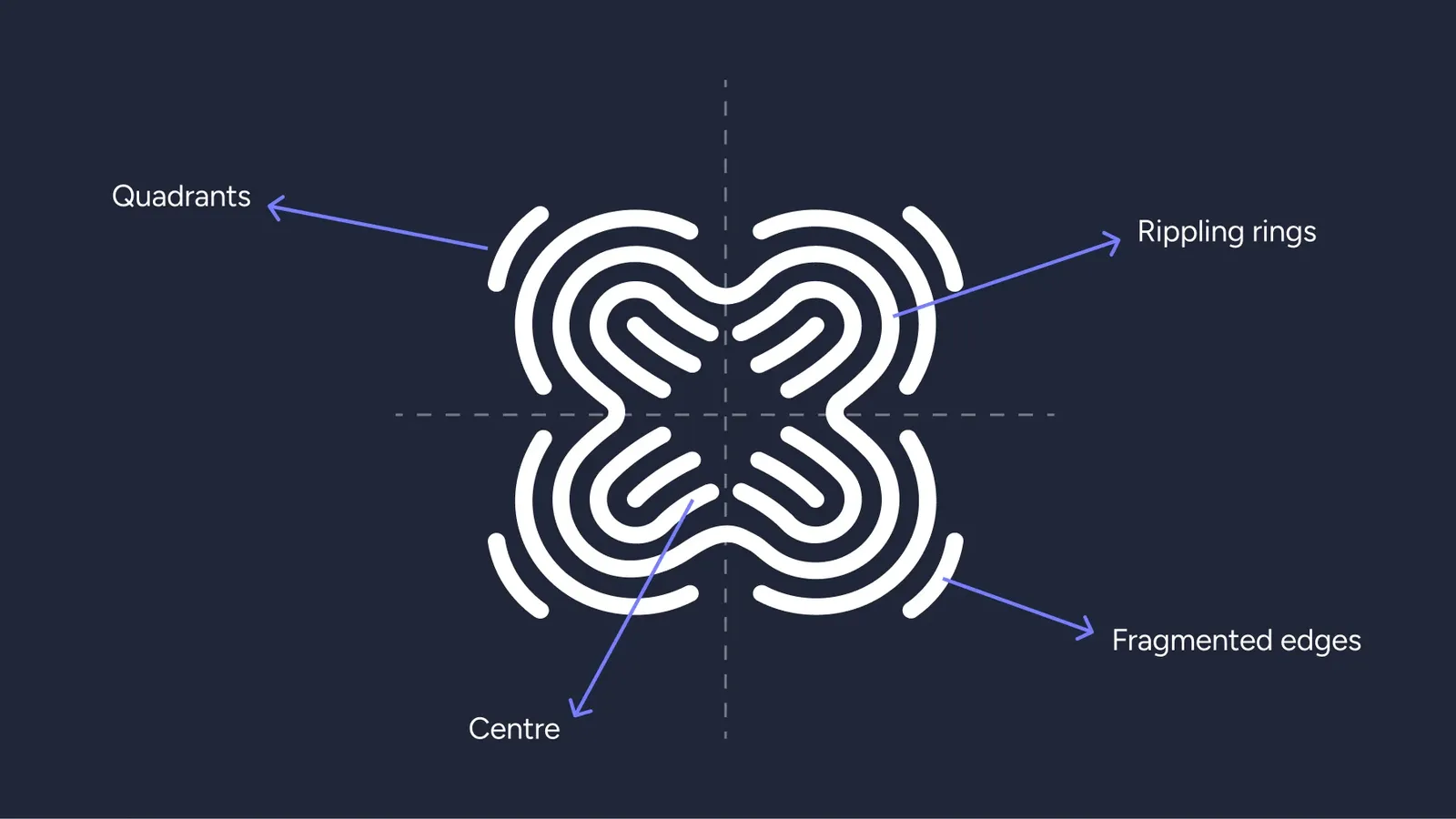
We stripped the colour from our own logo one day and noticed what the structure underneath was actually telling us. Without the gradients and motion, what remained was simpler than expected: a centre core, four quadrants reaching outward, rippling rings and fragmented lines at the edge. That structure was carrying meaning we had not put into words yet.
The Rorschach test (aka the inkblot test) is a projective psychological assessment designed to reveal a person’s unconscious thoughts, motivations, conflicts, and personality traits by having them interpret ambiguous inkblot stimuli.
Whether intentional or not, every logo out in the world is conducting an inkblot test. People see a shape and decide what it means based on their own context. Which then makes the business behind the brand either the author of that projection or a bystander to it.
‘Recognisable’ is not the same as ‘strategic’
Most logos do one job and do it well: they help people identify a brand. Which is why the logo often becomes the first and most durable touchpoint between a business and the world. Approximately 75% of people identify brands primarily by their logo, and while that makes recognisability worth getting right, it does not make it the same thing as being strategic.
Behind every visual asset of a brand identity, there should be something true about the company, even if nobody outside the team is quite able to articulate what that might be. Colour, shape, spacing, and motion – each aesthetic choice can connect back to who you are and how you actually work with people, and when it does, your logo stops being just a decoration.
The psychology behind it (the brain bit)
When Swiss psychiatrist Hermann Rorschach introduced the Rorschach test in 1921, the premise was simple: show someone a symmetrical, ambiguous inkblot and ask what they see. What they project onto the shape reveals something about how they make meaning.
The inkblots themselves do not carry an obvious picture (the focus being more on how you see than what you see), but as a test they work because humans are meaning-making machines. When we encounter something ambiguous, we reach for pattern and structure in whatever is in front of us. That instinct does not switch off when the shape happens to be a logo.
Why Inkblot is called Inkblot
Our name, inspired by Rorschach’s famous experiment, did not come from the randomness of the test but from what makes the test work in the first place, which is that the inkblots are not random at all. They provide a structured form that draws out how a person makes meaning rather than presenting them with one.
A brand lives in the mind of the person encountering it. Brand strategist Marty Neumeier argues that because we are all emotional and intuitive beings, every person builds their own version of what a brand is. As he puts it: "A brand is not what you say it is. It is what they say it is." It is the same instinct behind the old philosophical question of whether a tree falling in an empty forest makes a sound. A logo without a perceiver is just a random shape.
It’s not about stamping meaning onto a logo, but rather designing a logo that invites a particular kind of projection. This is why the question worth asking is not just "Does this look good?" but something closer to "What does this make people feel, and what does it make them remember?"
A quick tour of our metaphorical logomark
There are four elements that make up our Inkblot logomark. Each one stands for something we believe about how brands are built, and together they reflect the same thinking we bring to every brand we work on.
The centre
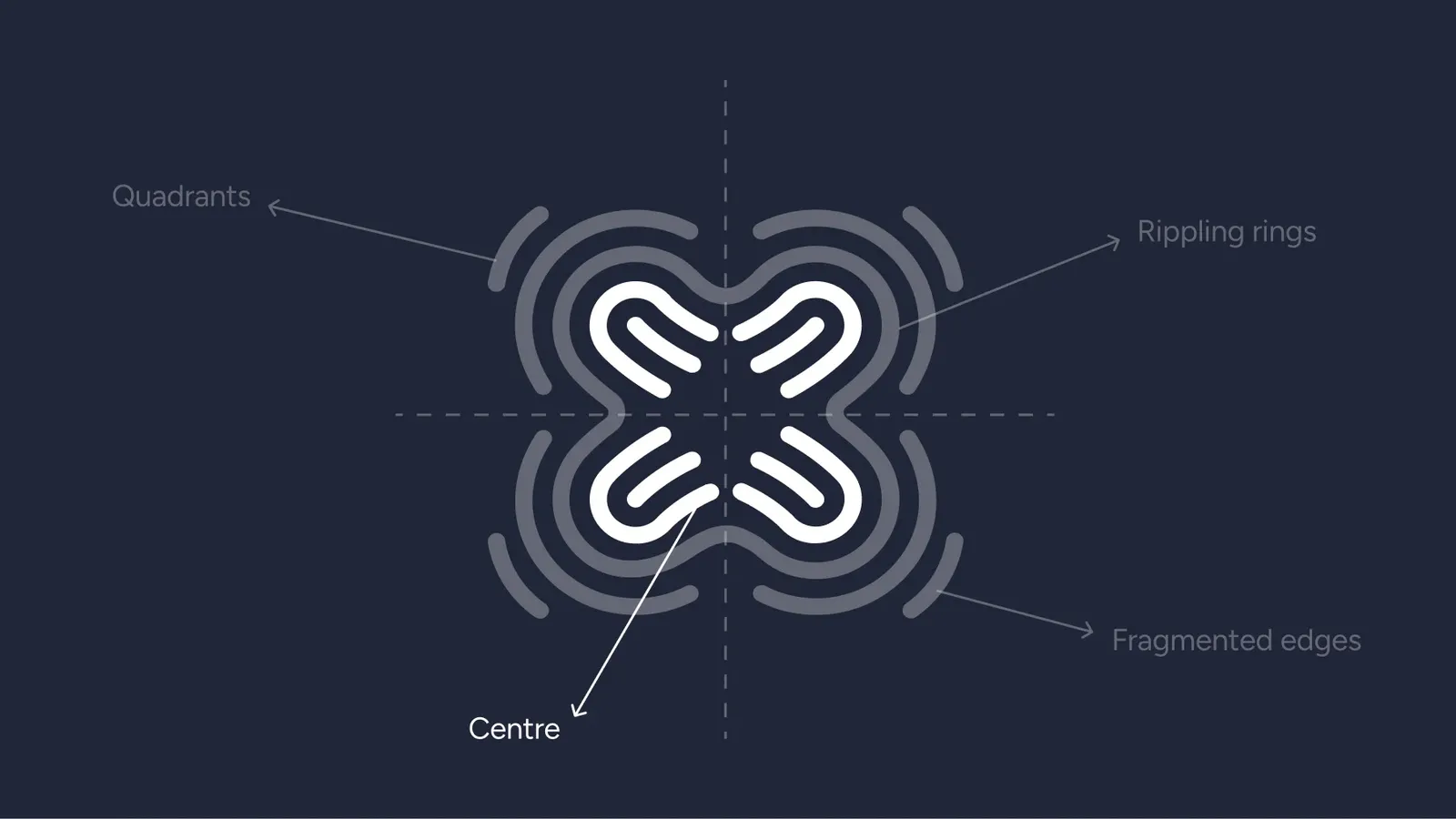
The centre of the logo represents the thinking that has to exist before anything else can, the dense work of understanding what a business actually does and why the customers who get the most value from it choose it. It is the part of the design process that is easy to skip because it is slow, and the output, usually a strategy document or a positioning framework, does not feel like visible progress even when it is one of the most important assets produced. But when this foundation is clear, everything that radiates out from it has something solid to anchor to. When it’s not, the layers that follow tend to look right individually without quite adding up to something that feels just right.
The rippling rings
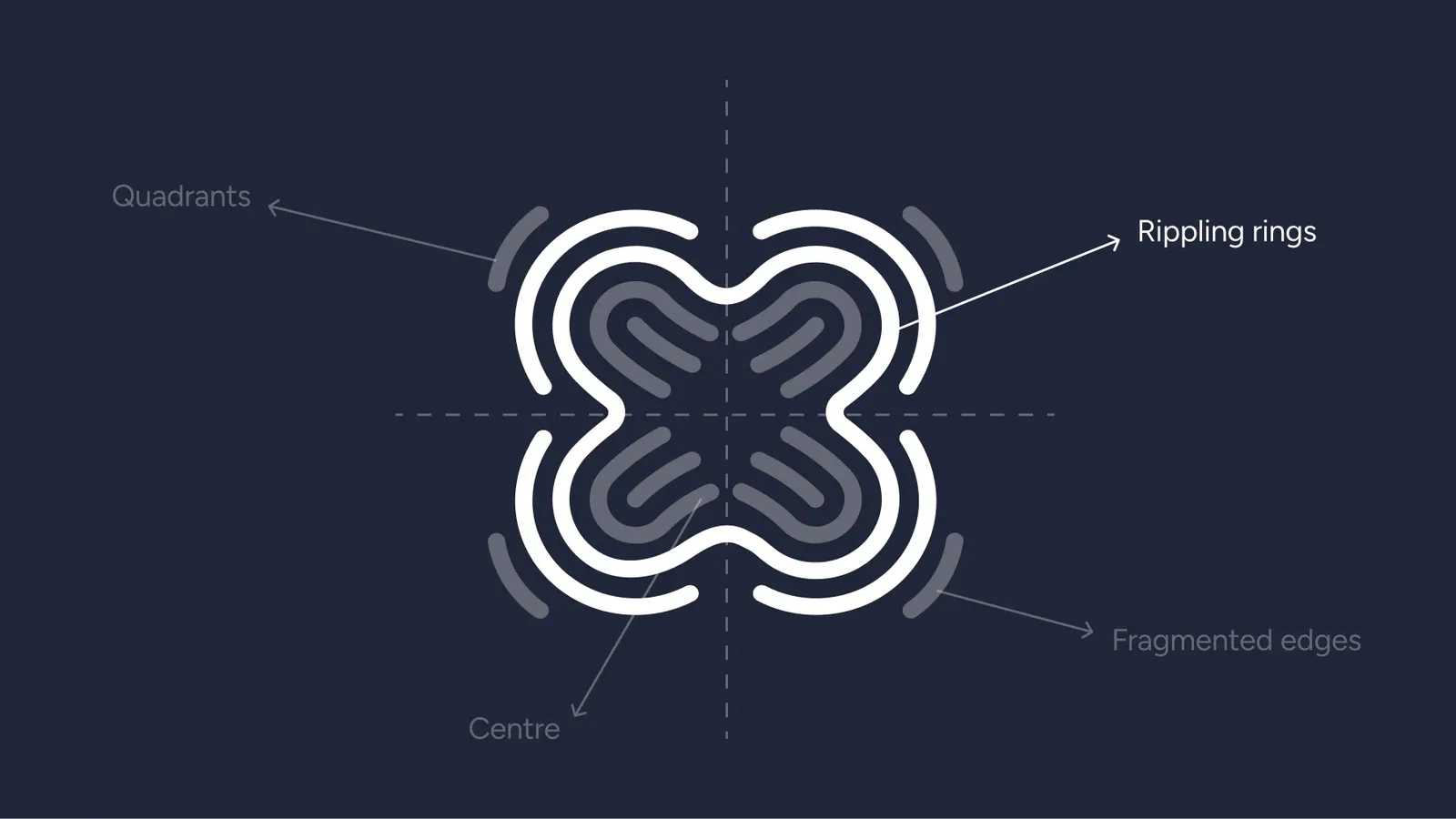
The rings rippling out from the centre signify the moment where a brand moves from internal thinking into the real world. They are the points where a business is actually encountered by people (hopefully the kind they’re trying to reach). A website, a conversation, a pitch deck, a piece of content on social media: each one is a different kind of touchpoint, but they should all feel like they are coming from the same place. When they don’t, the brand starts to feel inconsistent in a way that is not always easy to diagnose. This is usually because no single touchpoint is technically ‘wrong’, so the problem is rarely visible until you trace everything back to the centre: the brand strategy (or in this case, a lack thereof).
The quadrants
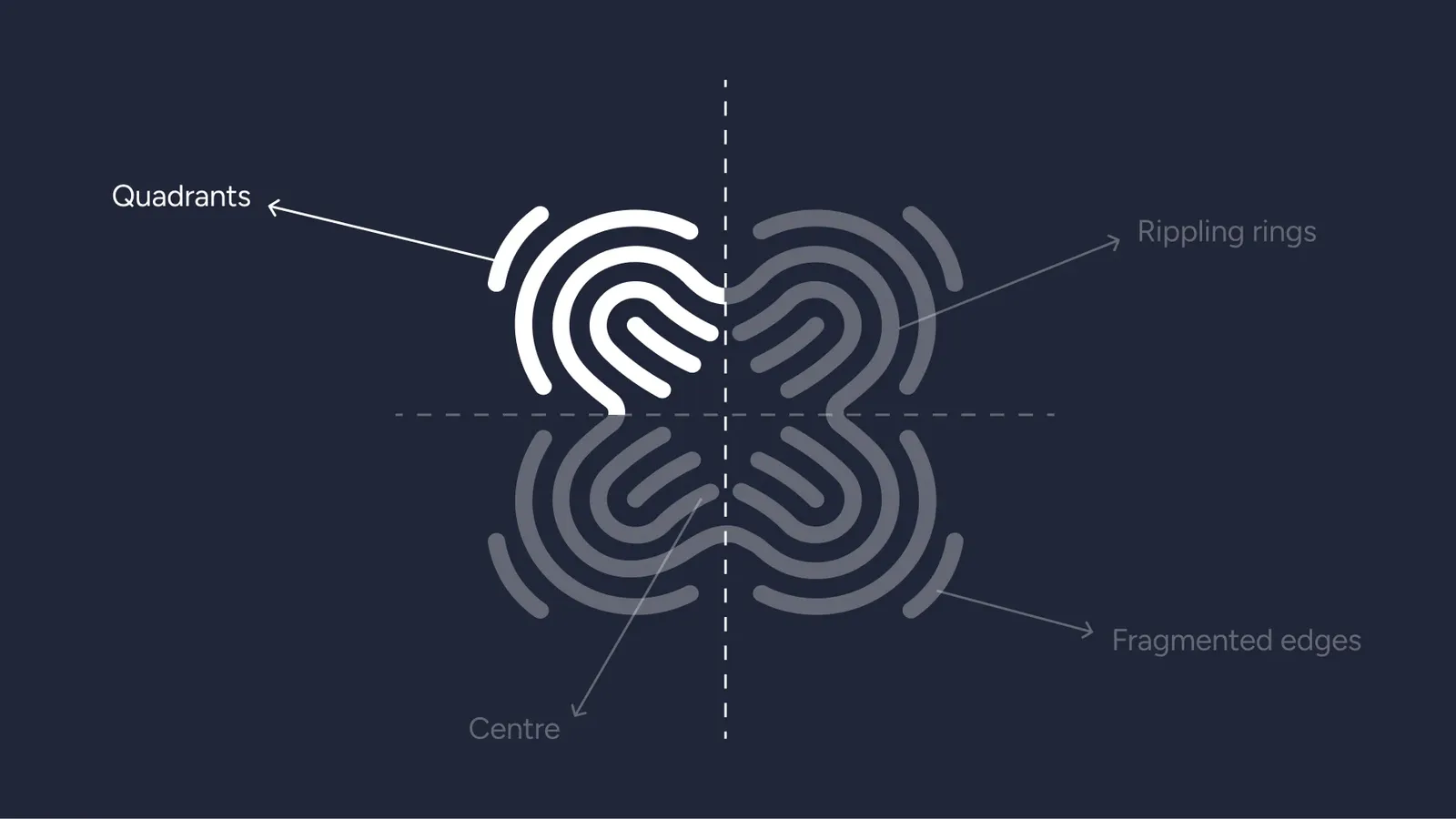
Our logomark can be sectioned into four quadrants, which each signify the sustainability of a brand. This is a different challenge that only presents itself after a new brand has launched and all the excitement has died down. When businesses think about momentum the same way they think about marketing, for example (a campaign here or a post there), the ones that are able to build something that lasts tend to be the ones that have invested in systems that help them to show up even when no one is actively pushing them. That kind of structure is what keeps a brand familiar rather than something people have to rediscover each time.
Fragmented edges
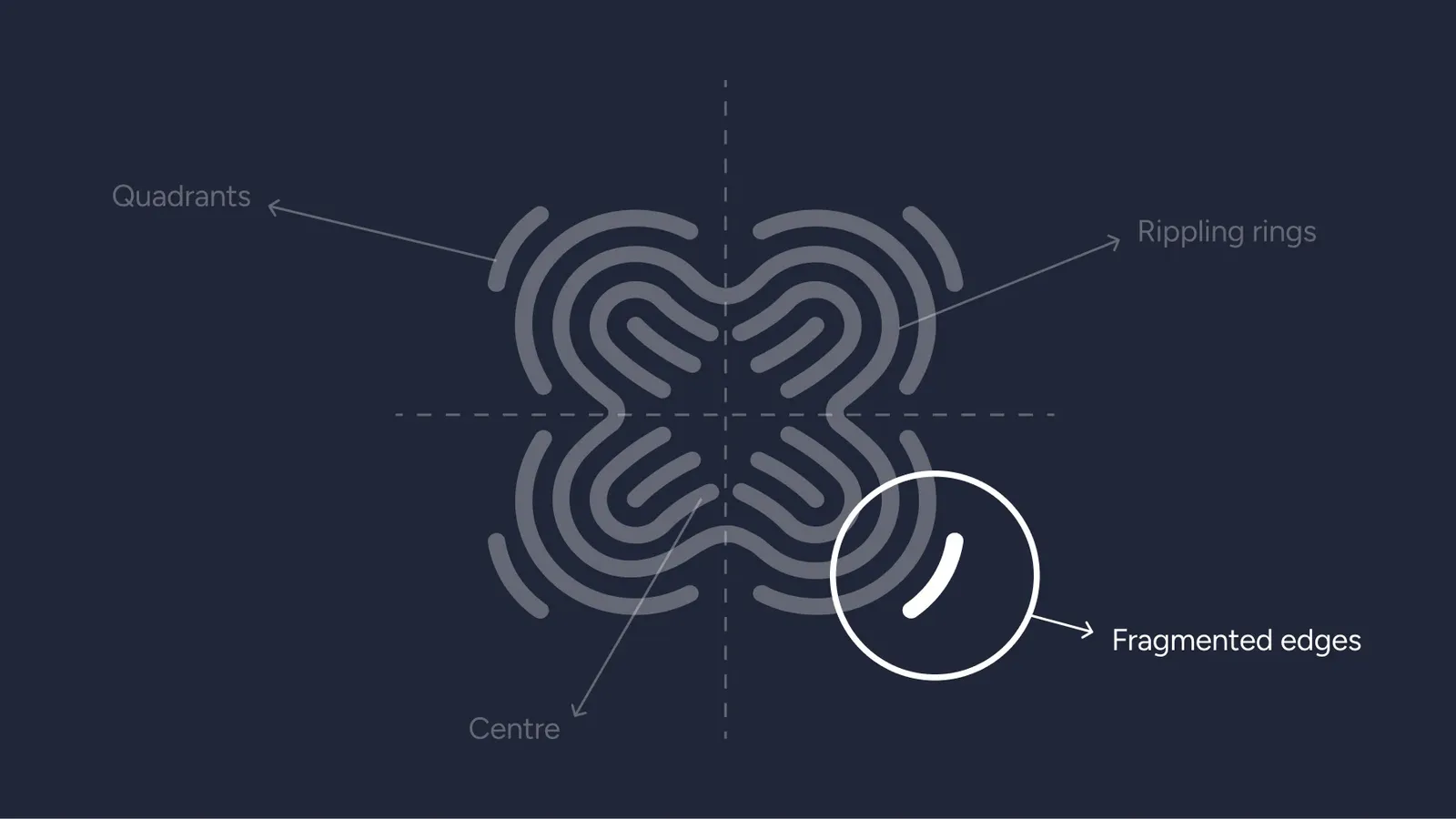
Measurement lives at the edge. These lines appear as fragments because individual signals rarely tell a story on their own. A brand that speaks to thousands doesn’t mean anything if the conversation is with the wrong audience (ie. the people who will never become customers or clients). ‘Brand awareness’ becomes a classic vanity metric if you can’t turn the data into something actionable. It requires a willingness to assess your brand objectively and ask the uncomfortable question, “Is my brand actually communicating the right thing?” It’s the only way to see what is actually moving the business forward versus what just looks good on your socials or your stationery.
Why the brain responds to this
When the way a logo looks aligns with the strategy behind it, our brains often register that fit before conscious reasoning kicks in. Psychologists call this processing fluency. It refers to the way our brains prefer the kind of information that they can process easily, which explains why people tend to feel stronger about a well-executed brand and remember it more readily, even if they aren’t quite able to explain exactly what about it feels right.
Recognition and familiarity build over time. Brand recognition isn’t earned through visibility alone (even though visibility does matter), but a brand especially doesn’t have to be ‘loud’ to get people’s attention or earn their favour. The familiar feeling that makes someone resonate with a brand is built through consistency. But that consistency only works if the structure underneath the brand is communicating the right thing to the right people at the right time.
What this means for your logo
While a logo, or the brand around it, functions as an inkblot test, you do not need a literal inkblot logomark to do any of this. You do need something in your business that is worth expressing, and most businesses have more of that than they realise. The question shouldn’t be whether you think your logo looks ‘good’. Instead of focusing on aesthetics or preferences alone, consider asking:
If a potential customer were to describe your business (with regard to your brand and all it includes), what story would they tell about you, and is that the story you want told?
Does your brand reflect who your business actually is or how you actually work?
Does it communicate to the right people what makes you different?
And does it explain why that matters?

About Sabrina Baert
A ray of sunshine, if there ever was one. Sharp mind, sharper wit. Will always make time for a coffee walk (this is an excellent example of priorities).