Project Overview
Our Client
Iroko is an African carbon project developer, building large-scale reforestation and agroforestry projects that generate high-integrity carbon credits, backed by rigorous data and real on-the-ground execution.
The Project
Brand strategy → brand identity system → logo suite and visual language, designed to feel infrastructure-grade, while staying rooted in real landscapes and the people who live in them.
Why this project mattered
The carbon-credit buying/reforestation market is crowded, mistrusted, and full of lookalike “good cause” aesthetics. Iroko needed a brand that could communicate nuance and professionalism without feeling cold or overly technical.
Our approach
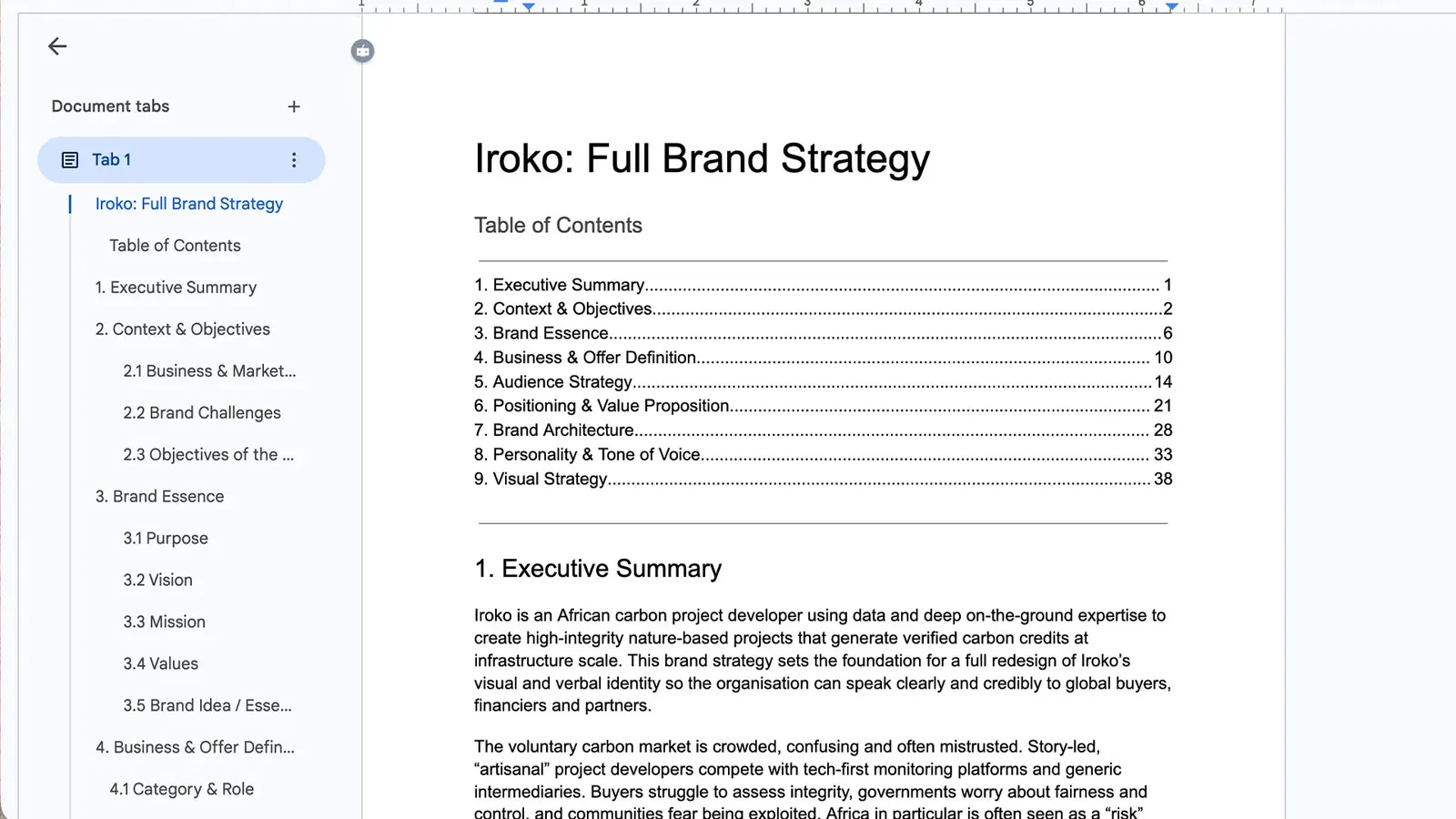
At Inkblot, we don’t treat strategy as a formality. For Iroko, the strategy phase was the design brief. It clarified what Iroko is (and isn’t), prioritised audiences, and translated differentiators into a platform that could guide everything from messaging to visual decisions.
Core strategic direction
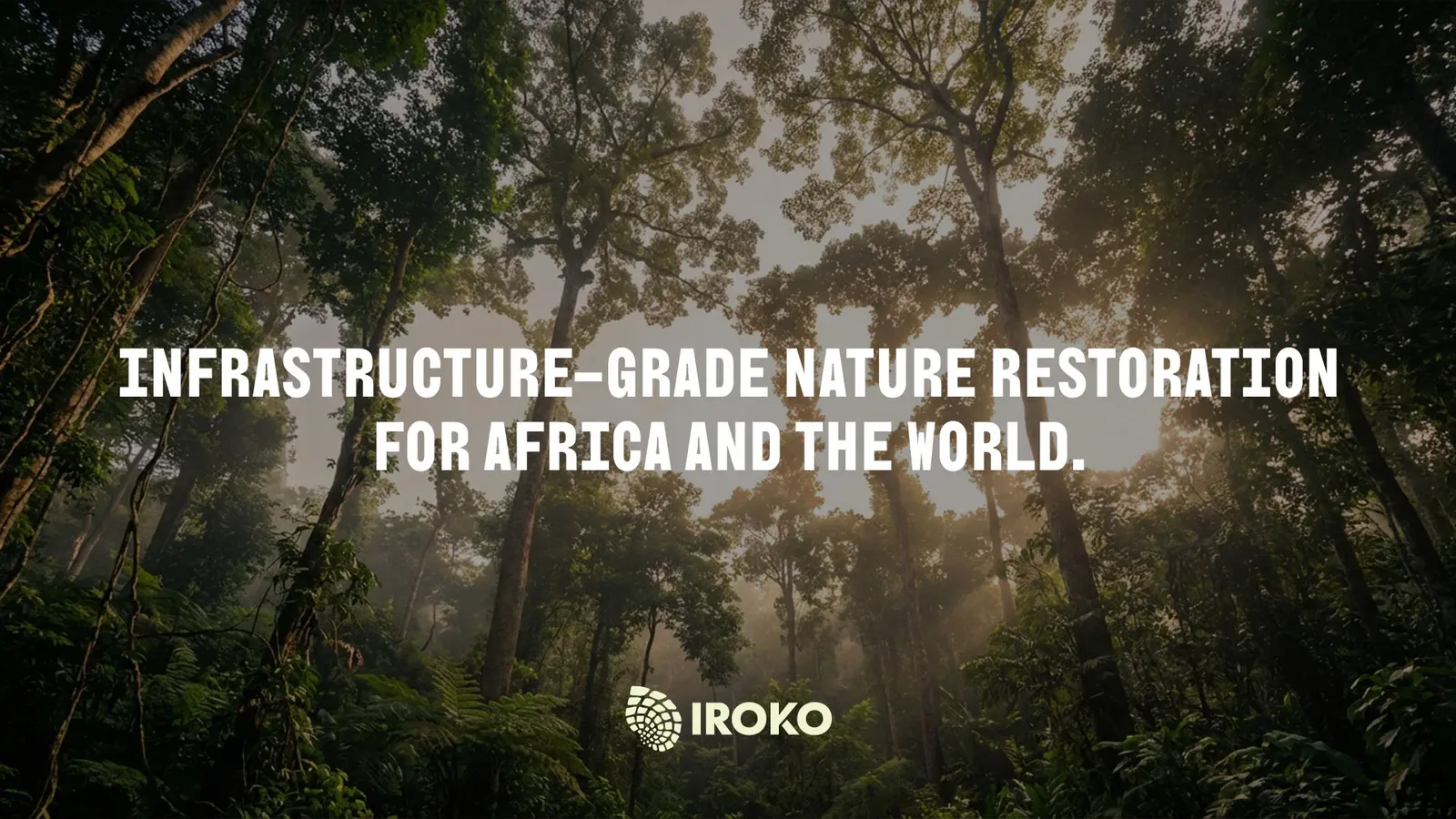
We anchored the identity around one line that could hold both the emotional story and the technical truth: “Infrastructure-grade nature restoration for Africa and the world.”
Scope & deliverables (high-level)
- Brand strategy foundation: category clarity, positioning, value proposition, audience strategy, tone of voice, and visual principles.
- Identity system: a logo suite and design language built to signal seriousness, transparency, and long-term commitment across high-stakes contexts.
The Iroko Story
A brand built where climate finance meets real land
Iroko exists to prove something specific: that large-scale nature restoration in Africa can be both climate-critical and economically transformative – if it’s built with integrity, governance, and a serious long-term operating model.
Not charity. Not vibes. Infrastructure.
A lot of climate brands lean on familiar cues: cliché rainforest imagery, generic “community-first” claims, and feel-good storytelling. Iroko wanted the opposite of that, not because the human story doesn’t matter, but because credibility is built through evidence, systems, and fairness that hold up under scrutiny.
Data and land, in dialogue
What makes Iroko structurally different is how it starts: with data-led site identification and modelling, then deep field execution and partnership, instead of “finding a beautiful site” and building a one-off story around it.
In practice, that means analytics is the engine under the bonnet: visible enough to build trust with technical stakeholders, but always serving the real work on the ground.
What Iroko is building
Iroko develops and operates large-scale reforestation and agroforestry projects designed to generate high-integrity carbon credits, with measurable co-benefits for biodiversity and livelihoods.
It is explicitly not a generic marketplace, a pure tech platform, or an NGO/campaign brand.
The ambition is long-term and measurable
Iroko was founded in 2019 and has evolved from early work in forest legal and sustainable supply-chain due diligence into large-scale carbon project development.
They have an ambition to reach 5,000,000 tonnes of CO₂ removed per year by 2030, and they’re already developing large projects, including a reforestation effort in Cameroon described at ~16,000 hectares.
Why the name matters
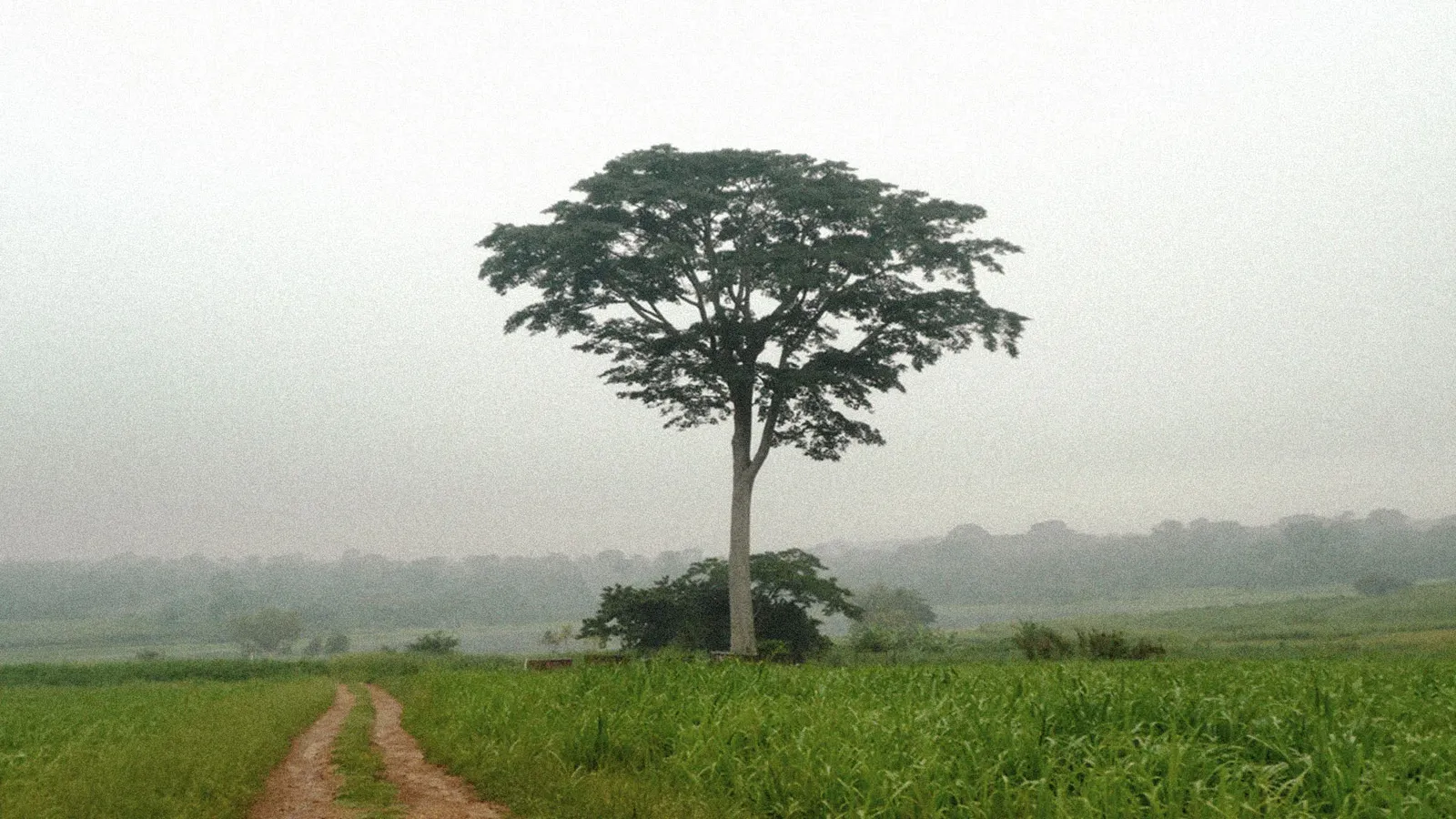
Iroko is named after the tropical African tree by the same name (Milicia excelsa). It is a symbol of strength and longevity. A useful metaphor for a company treating restoration like infrastructure: durable, governed, and built to stand up over decades.
The Brief
Iroko came to us at a formative moment: a company building large-scale nature restoration projects in Africa, with a model that depends on trust, long-term partnerships, and evidence that holds up under scrutiny.
The ask wasn’t “make it look nice”. The ask was to build a brand foundation and identity system that could carry Iroko’s ambition (and communicate what makes them structurally different) without leaning on category clichés.
The stakes
In carbon, brand isn’t decoration. It shapes whether people believe you, forward your document internally, or stop reading. The market is crowded and often mistrusted, and many companies in the space look and sound indistinguishable.
Iroko needed to signal credibility quickly, but not at the cost of humanity. Nature restoration is lived and physical, so the brand had to feel rooted in land truth, not abstract tech.
What had to be true
We defined a set of non-negotiables early on. These constraints that would guide both strategy and design:
- Clarity first. The brand must communicate what Iroko is in seconds: a project developer with serious operations, not an NGO, not a generic platform.
- Data and land, in dialogue. Analytics is the engine, but the work is real landscapes, real communities, and real governance. Both needed to be present.
- Trust without coldness. Rigour and restraint, but never clinical. Serious enough for major hubs, human enough for the village.
- Avoid the category costume. No performative “do-good” tropes; no tokenistic aesthetic shortcuts.
Our goal
To build a strategy-led identity that makes Iroko instantly legible and quietly distinctive: a brand that earns trust through clarity and feels rooted through texture, imagery, and narrative, where data never replaces land, and land never replaces proof.
Discovery & Research
Why research mattered here
In the carbon industry, trust is fragile and sameness is everywhere, so we couldn’t rely on intuition alone. The identity had to resonate with Iroko’s intended audiences while avoiding the visual and verbal shortcuts that dominate the category.
We treated discovery as the foundation: a way to find signal, not just collect references.
Methods
We used a mix of qualitative and contextual research to understand the brand from the inside and the market from the outside:
- Stakeholder interviews (founder and key stakeholders): to uncover ambition, constraints, tone, and what Iroko wanted to be and not be.
- Competitive and category analysis: to map the visual language, recurring claims, and positioning patterns, and find whitespace.
- Audience alignment work: to define what “credible” and “premium” should look like for Iroko’s buyer/financier audiences without slipping into cold tech minimalism.
- Synthesis: turning themes into brand principles, then translating them into design implications and system requirements.
What we analysed
To make the competitor work useful, we looked beyond “who looks good” and focused on patterns that shape perception:
- Messaging patterns: what people claim, how specific they are, what they avoid saying
- Trust signals: proof points, transparency cues, governance language, rigour indicators
- Visual tropes: photography choices, palettes, icons, illustrations, UI conventions
- Category posture: NGO-coded vs tech-coded vs institutional, and where each breaks down
Key findings
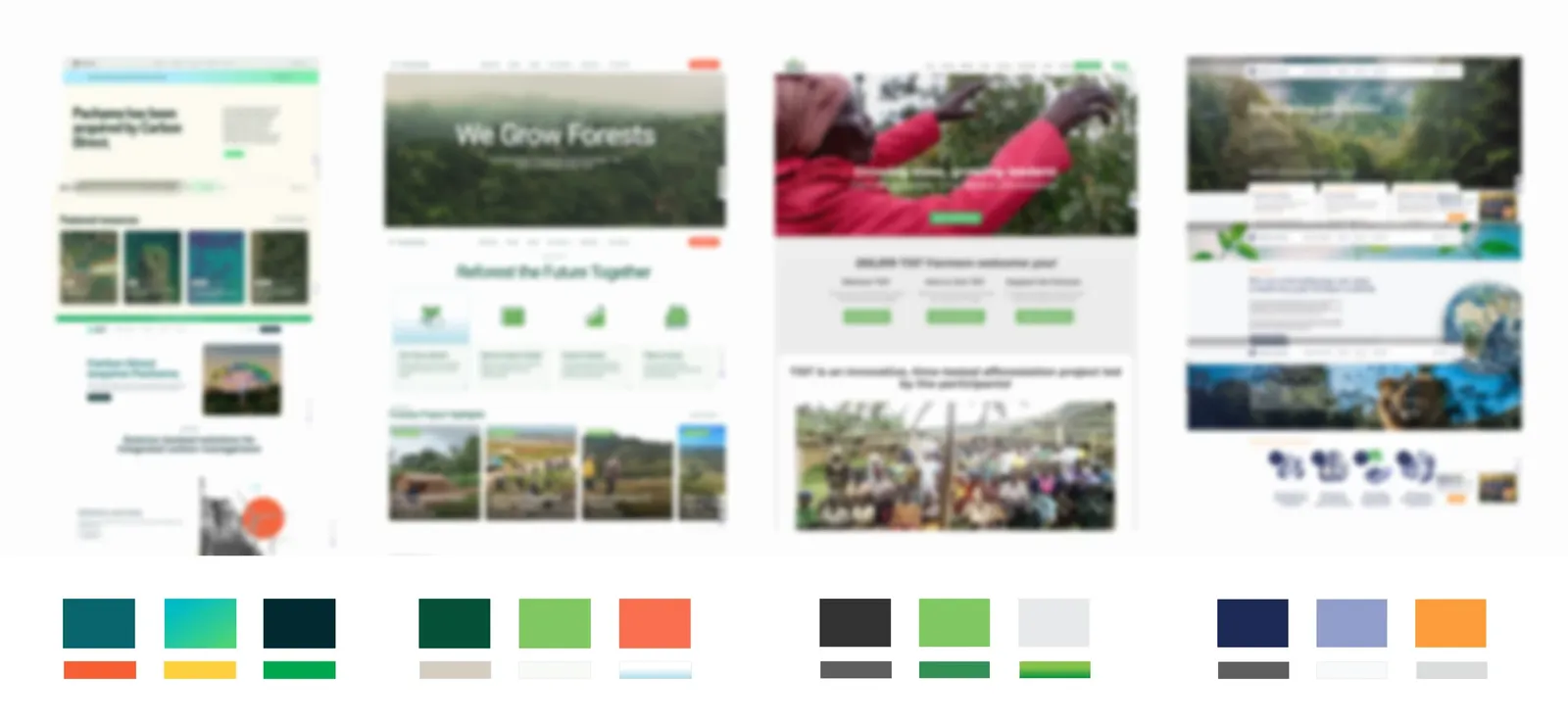
Finding 1: Category sameness creates scepticism
Insight: Many carbon brands rely on interchangeable “nature optimism” visuals and broad claims, which can feel generic rather than credible.
Evidence: Competitor scan showed repeated use of similar rainforest imagery, planting hands, and vague benefit statements.
Design implication: Build distinctiveness through a disciplined system (grids, data devices, clear hierarchy) paired with honest, grounded imagery, not performative tropes.
Finding 2: “Credible” reads as clarity, specificity, and restraint
Insight: For sophisticated audiences, credibility is signalled by legibility and specificity more than grand statements.
Evidence: Patterns across high-trust brands: restrained palettes, strong typography, clear information design, structured documents.
Design implication: Make the identity system document-ready: tables, charts, captions, footnotes, and report templates that look calm and deliberate.
Finding 3: Tech-coded brands often feel cold; NGO-coded brands often feel soft
Insight: The category swings between “tech minimalism” and “cause marketing”; both can miss the nuance of land + proof.
Evidence: Competitor map shows extremes, with few brands holding both seriousness and grounded humanity.
Design implication: Create a “dialogue” system: structured overlays and data markers meeting real textures and landscapes, with warmth as a controlled accent rather than decoration.
Finding 4: Differentiation must be structural, not aesthetic
Insight: Iroko’s strongest differentiation isn’t a look, it’s an operating philosophy: infrastructure-grade execution, data-first decisions, long-term partnerships, and fairness.
Evidence: Stakeholder interviews and strategy synthesis.
Design implication: Build an identity that feels engineered and durable, but still alive (fewer decorative elements, more system logic).
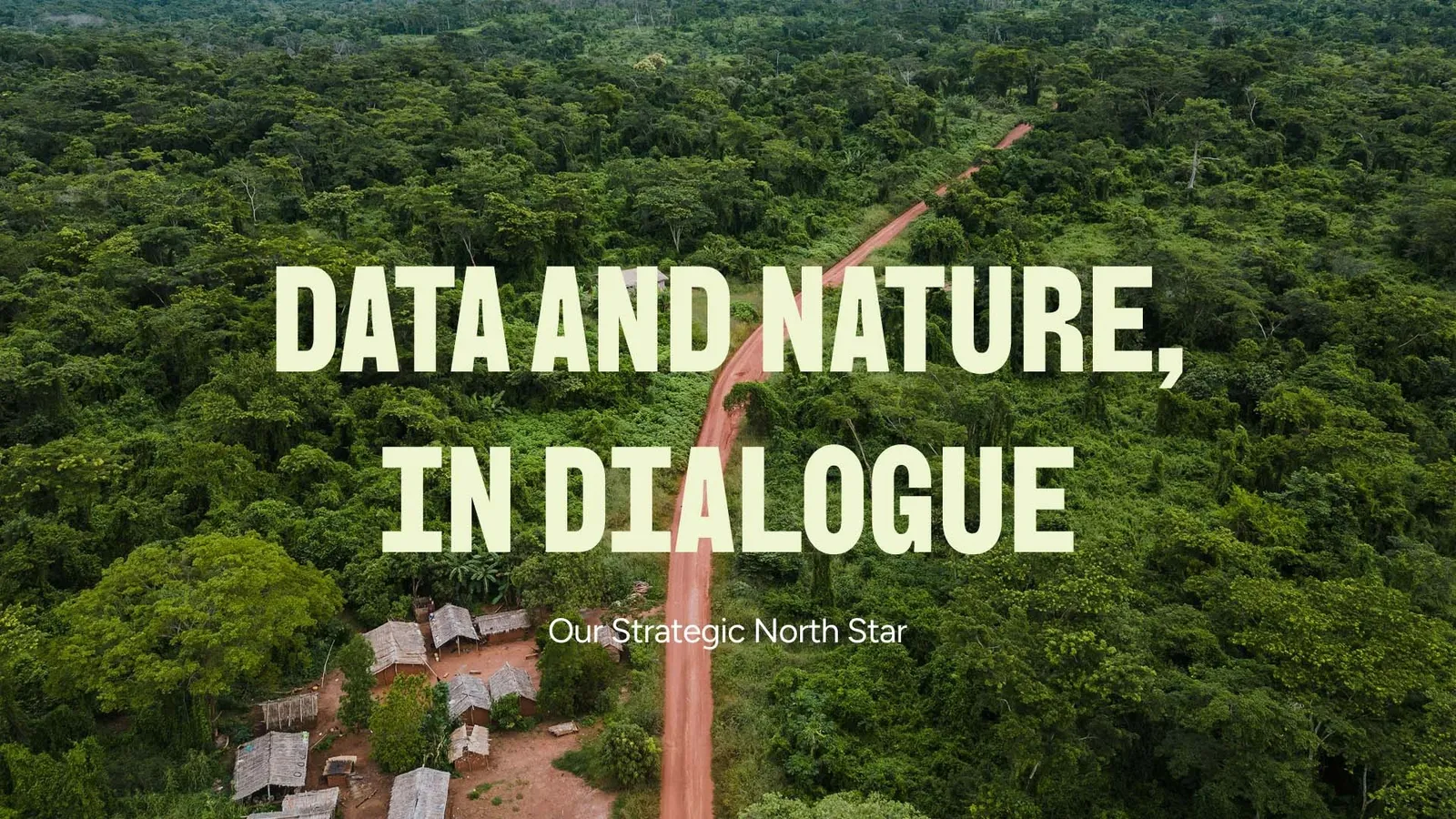
Strategic Direction
Our North Star: Data and nature, in dialogue.
We defined the creative core as a conversation between living systems (forest, soil, water, people) and structured systems (data, contracts, governance, finance), so the brand could carry both emotional truth and technical credibility without slipping into either “rustic NGO” or “sterile SaaS”.
Supporting spine: Infrastructure-grade execution (without becoming cold).
In the discovery conversations, the team repeatedly returned to an “infrastructure” analogy: not artisanal, one-off projects, but a repeatable system built to endure and scale, while still remaining visibly grounded in land and lived reality.
The strategic idea
Iroko is built differently, and the brand should make that difference legible quickly.We anchored the identity around four differentiation pillars that can be repeated across narrative, design, and proof artefacts:
- Data-first project creation (data and modelling at every step, not just prettier reports)
- The best deal for communities (more value flowing as direct, predictable income; clearly defined structures)
- Radical transparency & governance (showing how things work: economics, methodologies, decision rights)
- Infrastructure-grade execution (forests and agroforestry treated as long-lived infrastructure, not short-term campaigns)
Visual principles
To translate strategy into consistent design decisions, we set five visual principles:
- Infrastructure, not charity: scale, structure, engineering clarity; avoid “fundraising poster” cues.
- Data and nature in dialogue: grids/contours/mapping devices interacting with organic forms; avoid either extreme (too earthy or too sterile).
- Africa, without cliché: specific environments and real contexts; avoid tokenistic motifs and tourist shorthand.
- Serious enough for London, New York or Tokyo; human enough for the village: professional typography and layouts with grounded human moments; avoid both cold fintech and rustic NGO styling.
- Clarity first, beauty as a result: information design leads (tables, charts, maps); avoid over-styling data.
Moodboards and Visual Territories
To translate the strategy into something you can feel, we mapped four visual territories that explored different ways Iroko could sit in the world: premium and credible, but still grounded in real places, real soil, and real work.
Each territory was designed to stress-test a different “balance” between land and data: how much of each, in what tone, and with what level of warmth.
A key theme that surfaced early was perspective. The category often defaults to satellite views and glossy “forest-from-above” imagery, but Iroko wanted something more human and truthful. Jules called out that competitors are almost always “seeing the forest from above”, whereas Iroko’s lived reality is on the ground, looking up.
That single comment became a creative north star for how photography, layouts, and even the graphic language could behave.
Territory 1: “Think Big, Sweat the Details”
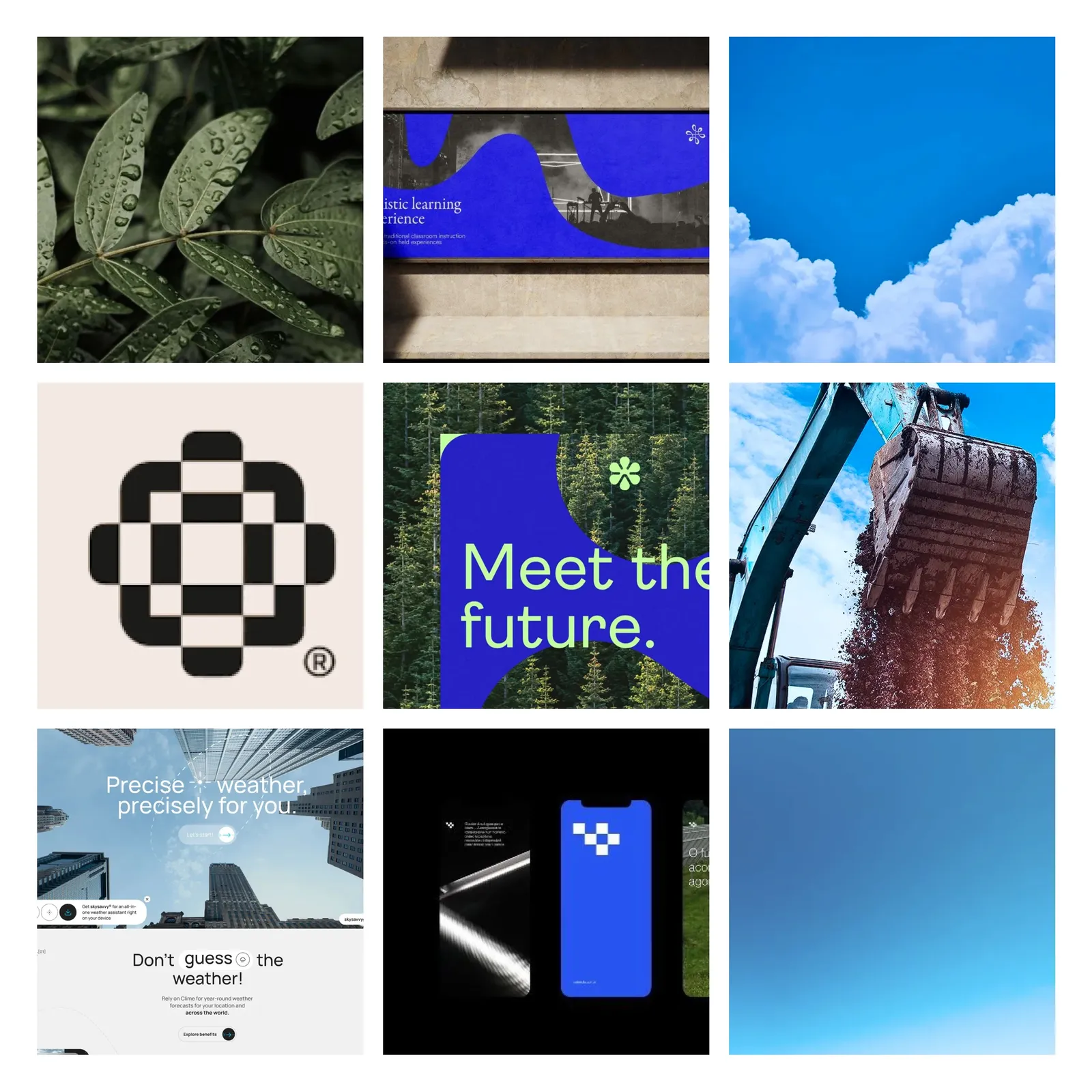
What it explored: optimistic clarity + analytical strength. Clean contrasts, confident typography, and “open air” imagery (skies, light, height) to suggest long-term vision and transparency.
What we learned: the idea landed (especially the “looking up” perspective), but the palette needed refinement. The team didn’t connect with the cobalt; it read too primary and a bit old-school/artificial.
Design implication: keep the concept of openness + lift, but evolve blues into something more atmospheric and credible (and avoid drifting into generic tech). Savanna explicitly wanted to stay away from the “desaturated blues” used by a key competitor.
Territory 2: “Future-Focused”
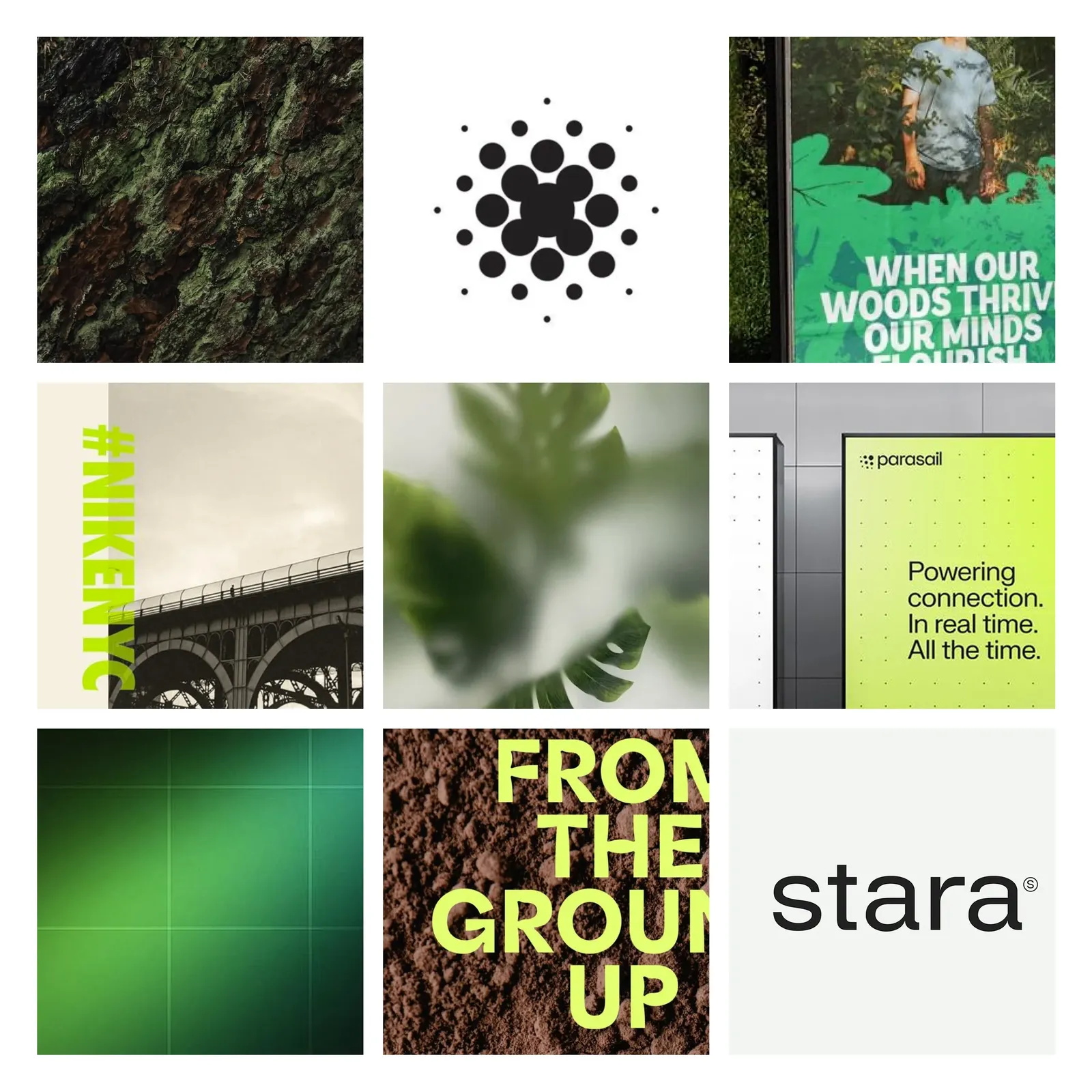
What it explored: a sharper, more tech-forward expression: brighter accents, a more “product” feel, and a punchier contrast system intended to signal momentum and modernity.
What it solved: it gave permission for energy and “signal” moments (accent colour as emphasis, data highlights, calls-to-action). They liked the idea of pops and saturated accents as long as they felt intentional.
Risk: it could tip into “platform brand” if nature and place weren’t kept present (this is exactly the category trap you were trying to avoid).
Territory 3: “Relentless Doers”
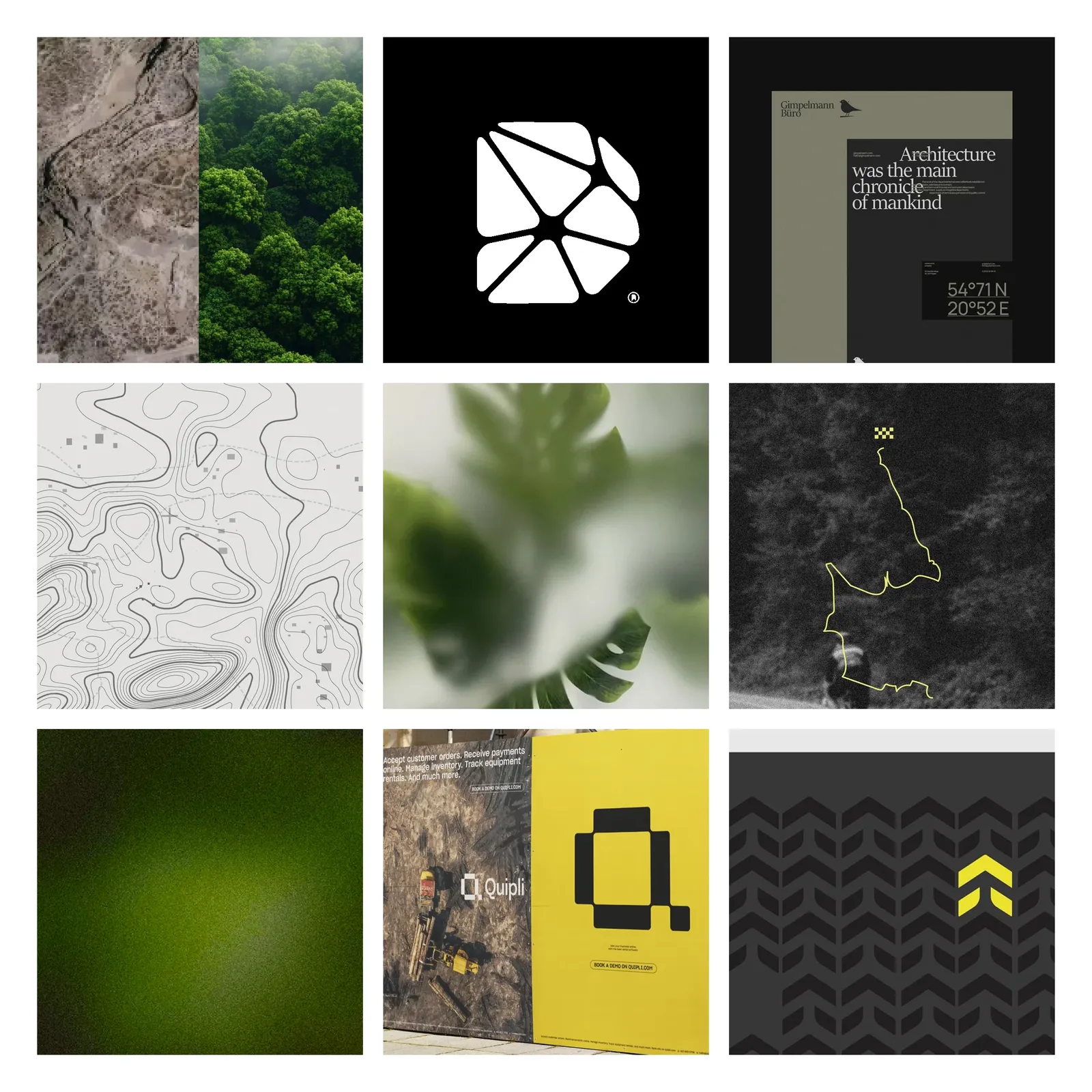
What it explored: Iroko as infrastructure-grade delivery — engineered, practical, “built for hard”. Strong rectilinear forms, rigid grids, and a more industrial seriousness.
What it contributed (even though it wasn’t the final): it reinforced a valuable truth from the strategy: the identity should ultimately blend structural confidence, analytical clarity, and on-the-ground realism — not choose just one.
Risk: without warmth and place, it could skew impersonal. (Useful territory, but it needs the humanity and geography to keep it Iroko.)
Territory 4: “Wayfinding through the Jungle” (the chosen direction)
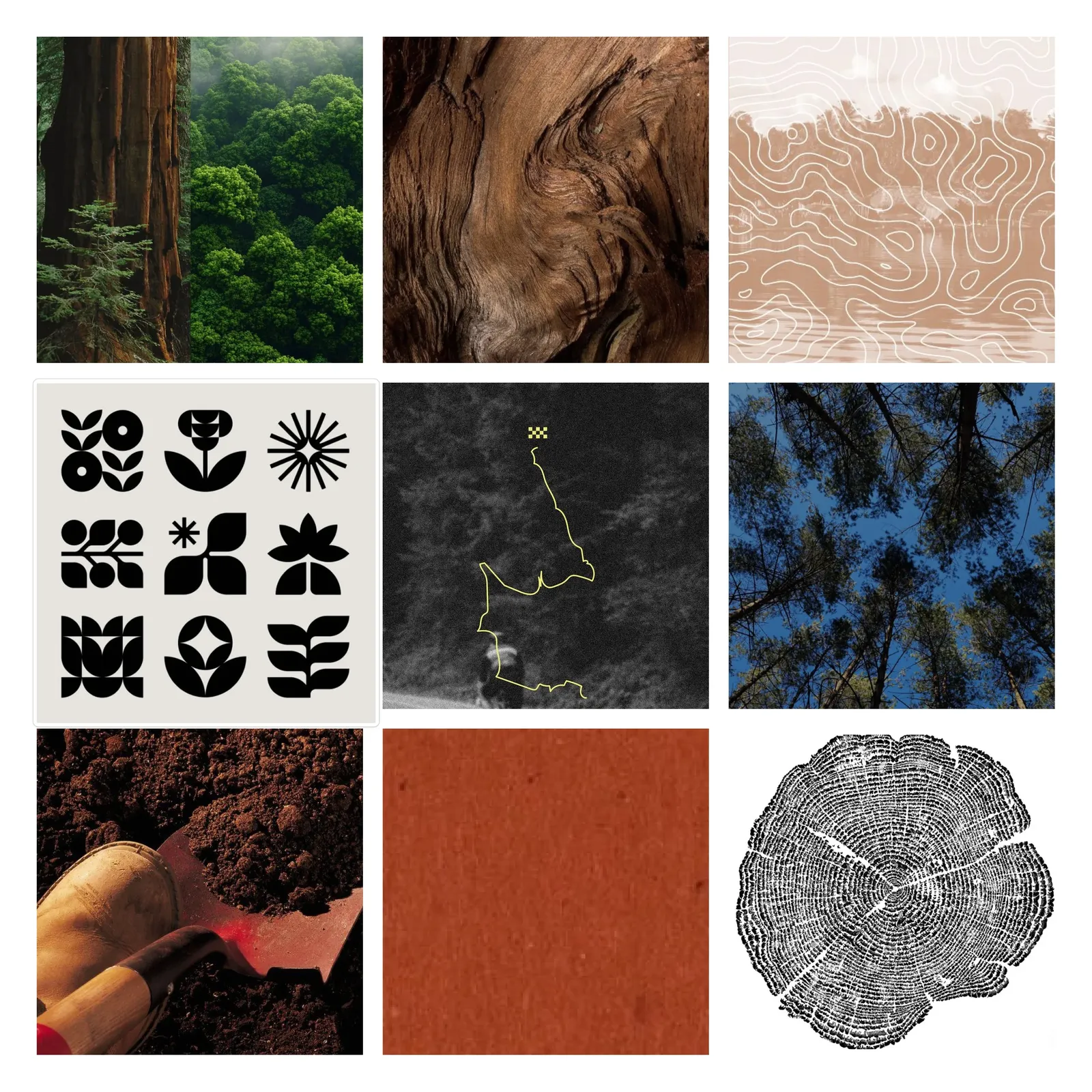
What it explored: Iroko as a guide. Bringing structure to complexity, mapping what’s hidden, and navigating real terrain with rigour.
Why it won: the team responded to how it held both worlds at once: grounded and earthy, but still system-led.
Key refinement unlocked in the review: photography and palette can’t be decided in isolation, they must “jive well” with African landscapes and project realities. Jules then shared a field photo from Cameroon that “encapsulated” the colours for him (early morning light, rain, red earth) anchoring the palette in lived experience rather than taste.
Design implication: this direction naturally supports your “data + land” spine: data layers over landscapes (maps, contours, overlays, grids) without becoming cold and without leaning on generic ecotropes.
The decision and what it meant for the system
Choosing “Wayfinding through the Jungle” didn’t mean “everything must look like a rainforest.” It meant: tell the truth about where the work happens, and layer data, mapping, and structure on top, carefully and intentionally.
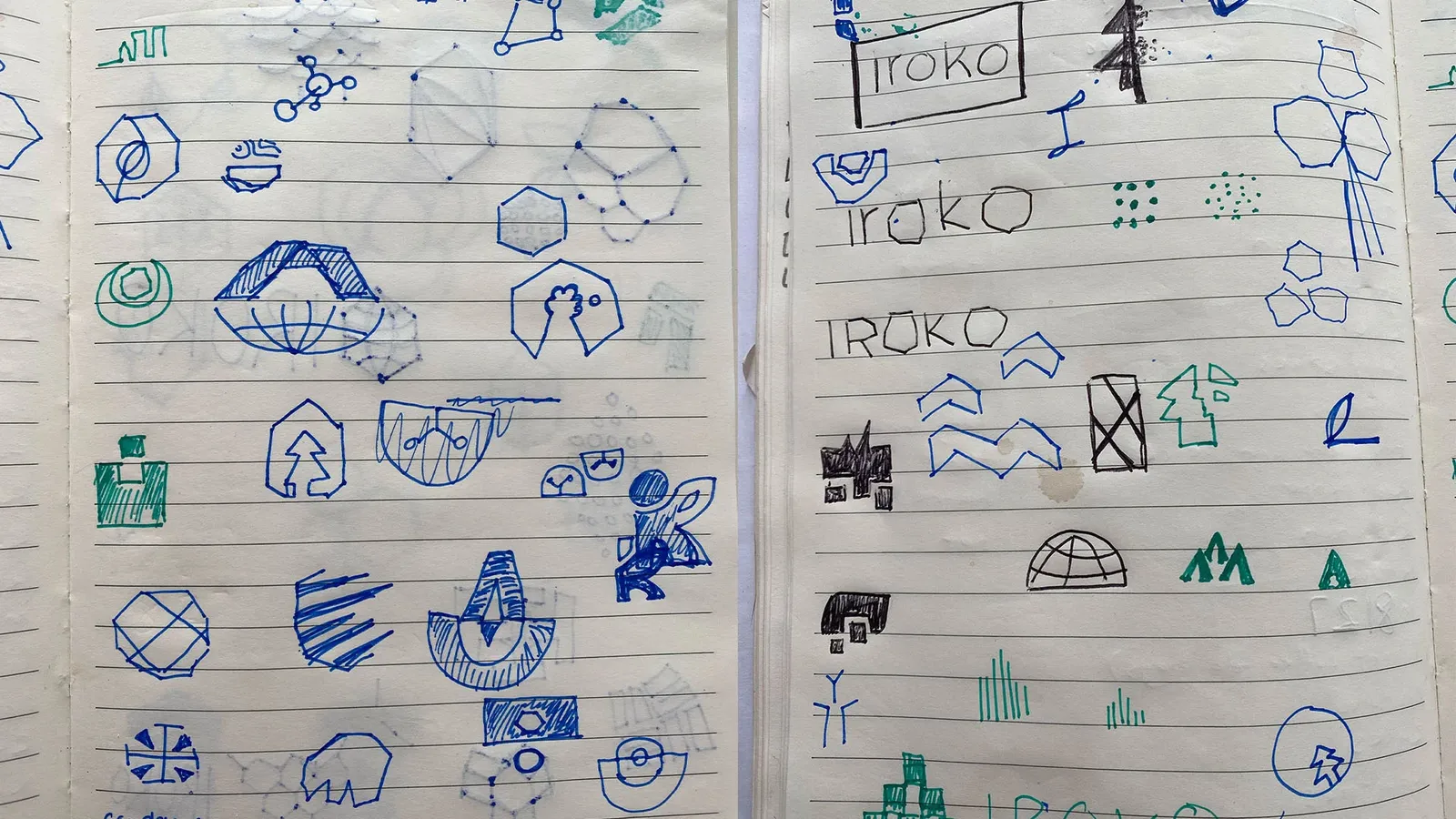
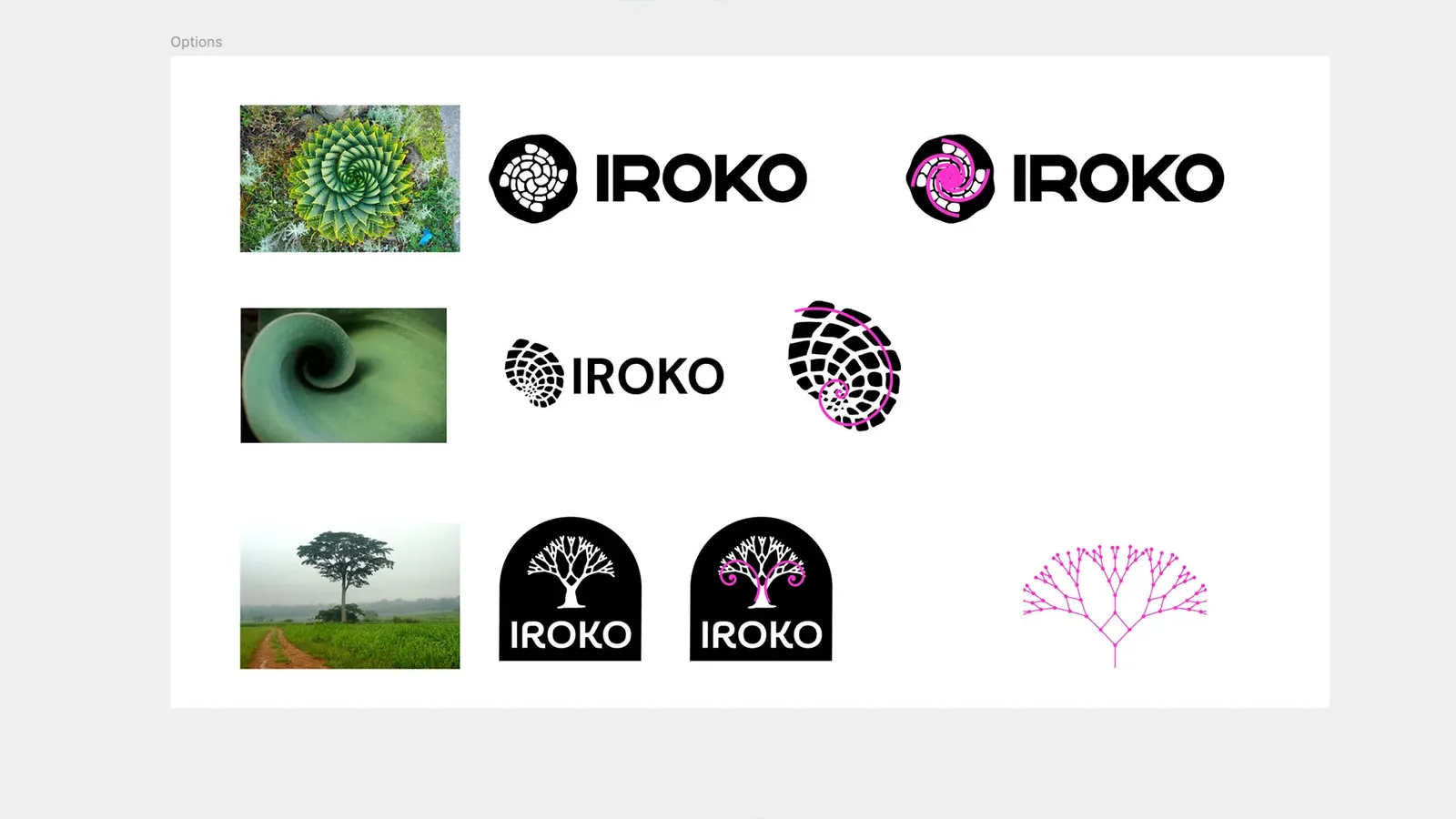
Exploration and Iteration
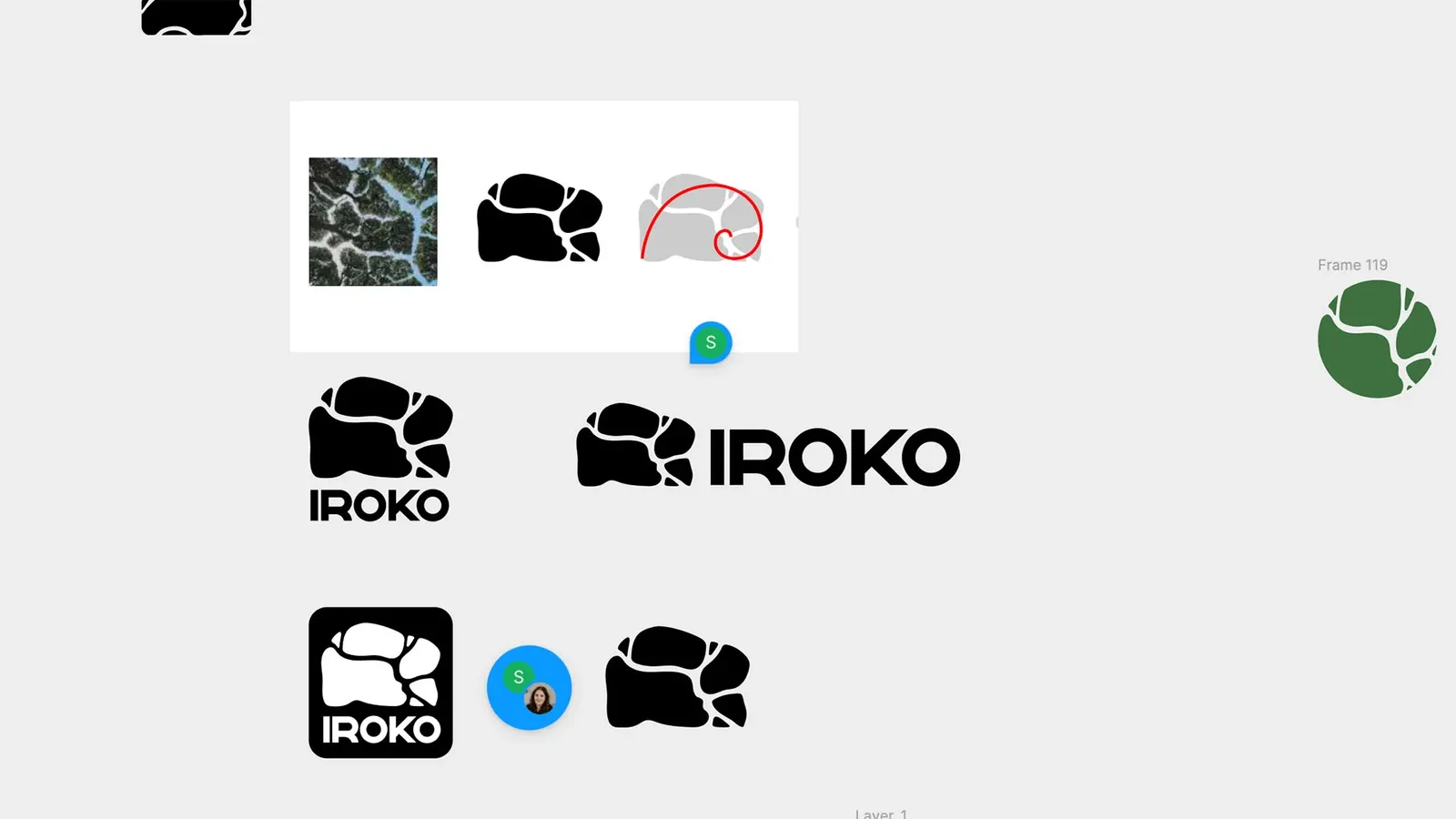
The Final Identity System
The final logo suite was built to do one thing exceptionally well: make Iroko feel credible, infrastructural, and undeniably “of the land” (again, without falling into familiar climate/NGO tropes). In early conversations, the team was clear that the brand had to “pass the serious and trustworthy test” and avoid looking like “every other project developer” with generic sustainability cues.
That “infrastructure, not charity” posture is also baked into how Iroko talks about their work: step-by-step, engineered, repeatable, like building a bridge.
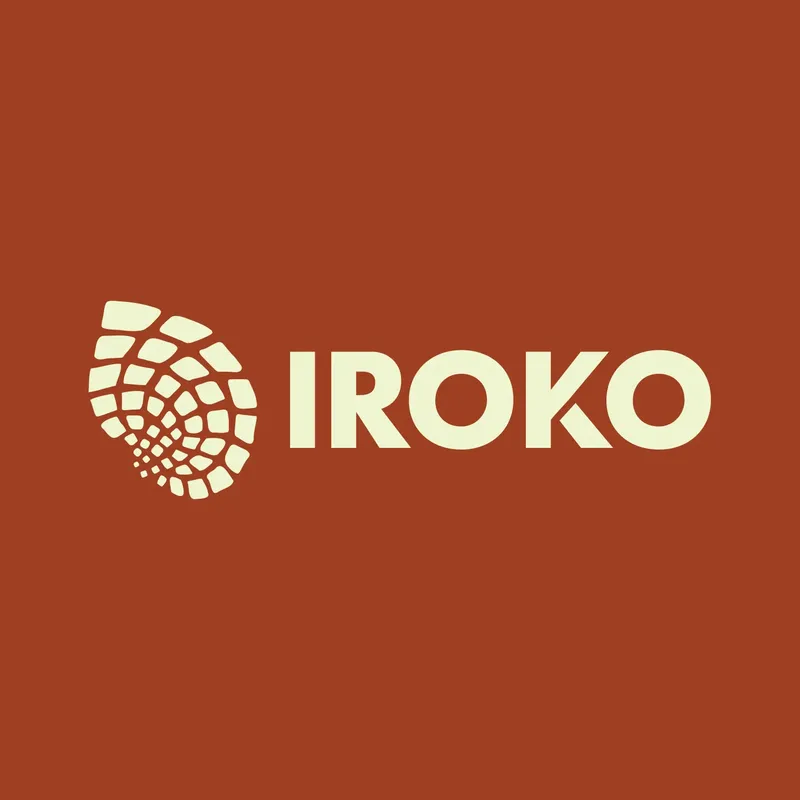
Primary / full logo (icon + wordmark)
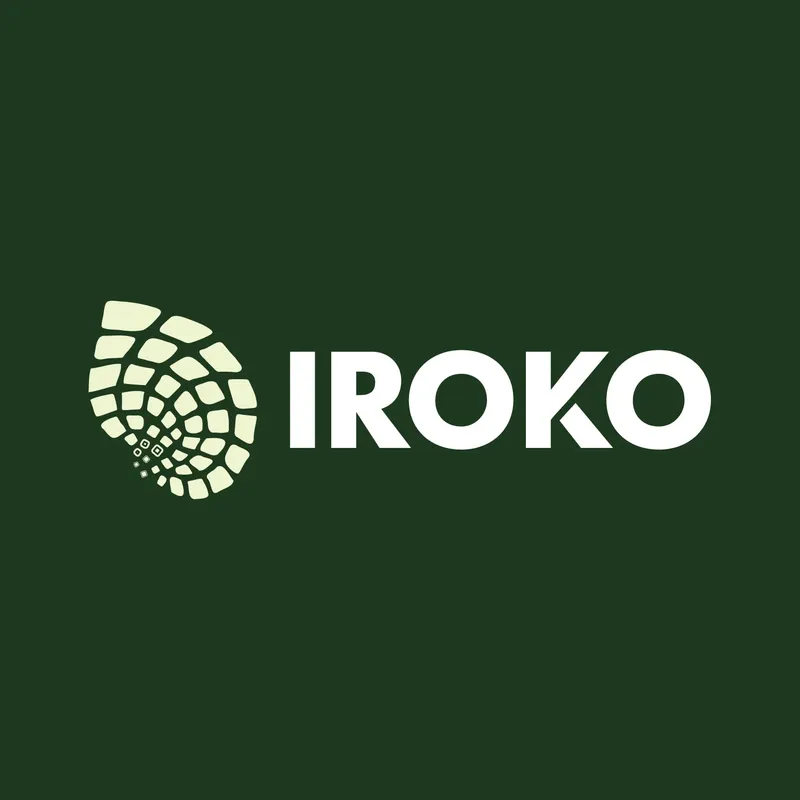
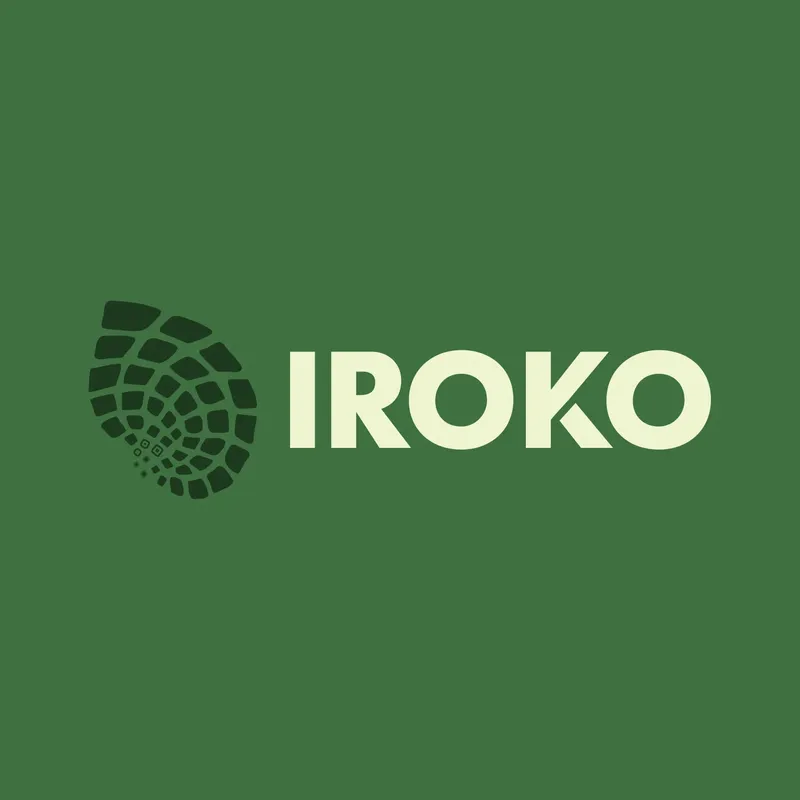
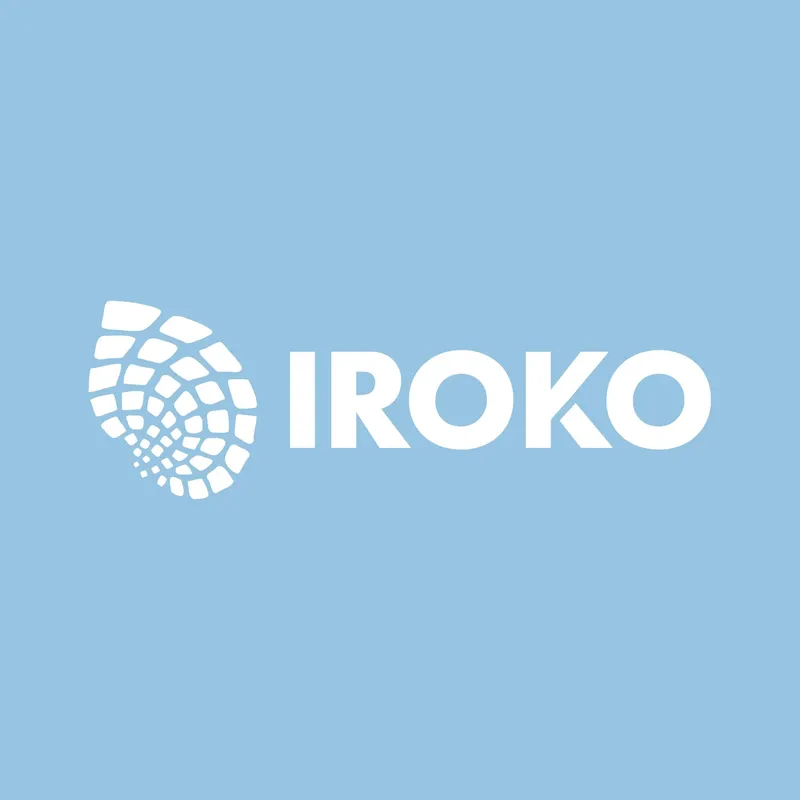
What it communicates
- A system you can trust: The icon is composed of repeatable “cells” that read as an organised structure, not a decorative mark. Together with the bold wordmark, it signals operational seriousness, something designed to hold up under scrutiny (finance, policy, reporting).
- Data and land in dialogue: The structured modules feel data-driven; the overall form still feels organic and living. That tension is the point: analytical clarity applied to complex landscapes.
- A brand built for scale: The lock-up feels confident and stable, appropriate for a company building long-term projects across large geographies, not a short-term campaign.
Why it aligns with the strategy
- It reinforces Iroko’s commitment to clarity and credibility as a differentiator, while staying rooted in the physical realities of land-based work.
- It supports a brand architecture where “Iroko” remains the primary public-facing name and anchor, even as different projects/products appear over time.
Icon mark (the modular spiral)




This is the “meaning engine” of the identity, designed to carry the story even when the name disappears (favicons, app icons, map stamps, report watermarks).
What it communicates
- Data × Nature made visible: The spiral growth logic and tiled modules suggest a living system being organised, like a canopy mapped into parcels or a landscape translated into a repeatable analytical grid.
- Infrastructure, not charity: A single, confident silhouette built from repeatable parts feels engineered and scalable. It’s purposely not “hand-planted tree” symbolism, which was explicitly called out as a category cliché to avoid.
- Aerial/landscape cue: At a distance, it can read as an overhead cluster (canopy, corridor networks, parcels) aligned with how Iroko evaluates land at scale (hectares, sites, boundaries, selection).
- Transparent by design: The negative space between tiles forms “channels”: implied pathways, flows, and separations. That supports the radical transparency pillar: nothing is a black box; structures and movement are legible.
Why it aligns with the strategy
- The icon embodies Iroko’s promise: use robust analysis to navigate complexity in the real world, then show the work with clarity. That’s exactly the kind of “brutal transparency” the team described early on.
- Its modularity also hints at governance and repeatability: the system can expand, be audited, and remain coherent over time (a visual metaphor for rigour).
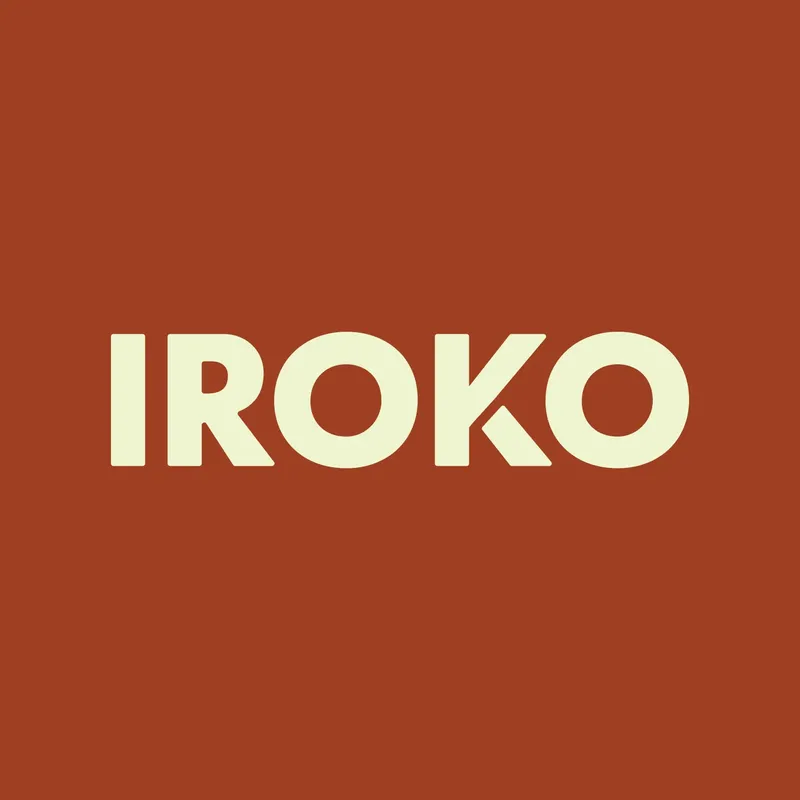
Wordmark (IROKO)
What it communicates
- Strength and legibility: The bold, geometric letterforms feel stable and modern, less “brand poetry”, more “institution-grade”.
- Confidence without noise: The simplicity reads as premium because it’s restrained. It lets the story (and the work) do the talking, rather than trying to persuade with embellishment.
Why it aligns with the strategy
- In a space where credibility is everything, the wordmark does the first-pass job instantly: it looks serious, considered, and built for long-term trust.
- It supports a clear naming and hierarchy approach where Iroko remains the anchor brand externally (reducing confusion and strengthening recognition).
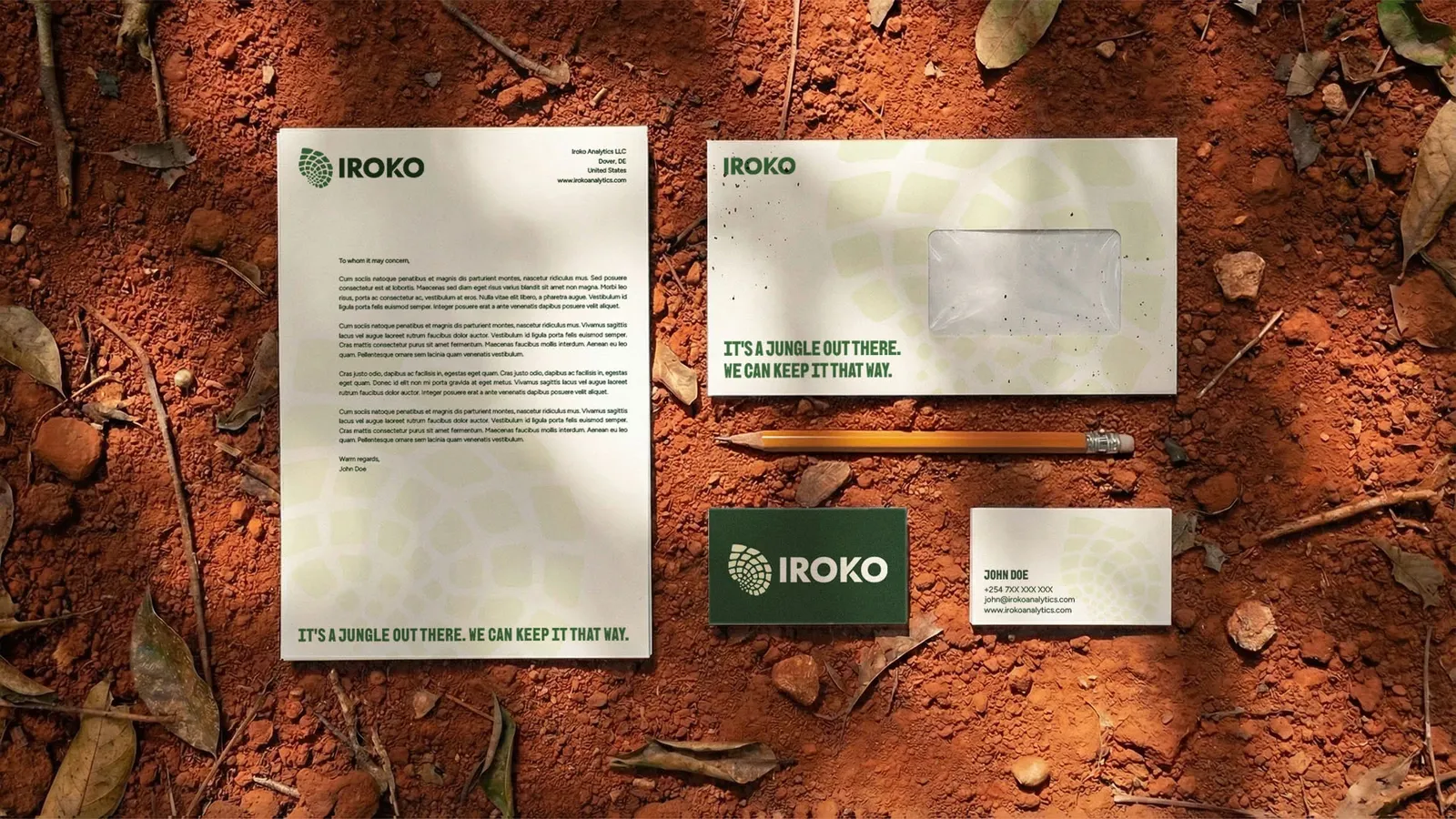
How the logo system builds clarity and trust
Beyond symbolism, the system behaviour is what makes the identity trustworthy:
- Consistency across contexts: A simple, strong icon + wordmark lock-up holds up everywhere (reports, dashboards, field documentation, partner decks) without “marketing gloss”.
- Immediate recognisability at multiple scales: the icon reads as a distinctive silhouette even when small; the wordmark stays legible and stable at large sizes.
- Co-branding ready (without dilution): The architecture keeps Iroko visually dominant while allowing project or partner descriptors to sit alongside it cleanly, important for multi-stakeholder work.
- Signals transparency through form: The separations and “channels” in the mark visually echo the idea that value chains, governance, and outcomes should be visible, not hidden.
Colour + Typography
If the logo is the idea, the colour and type system is the behaviour: how Iroko shows up across decks, reports, dashboards, field materials, and the website, consistently signalling “infrastructure-grade” credibility without losing the grounded, on-the-ground reality.
Colour palette: “forest, sky, earth” (with room for clarity)
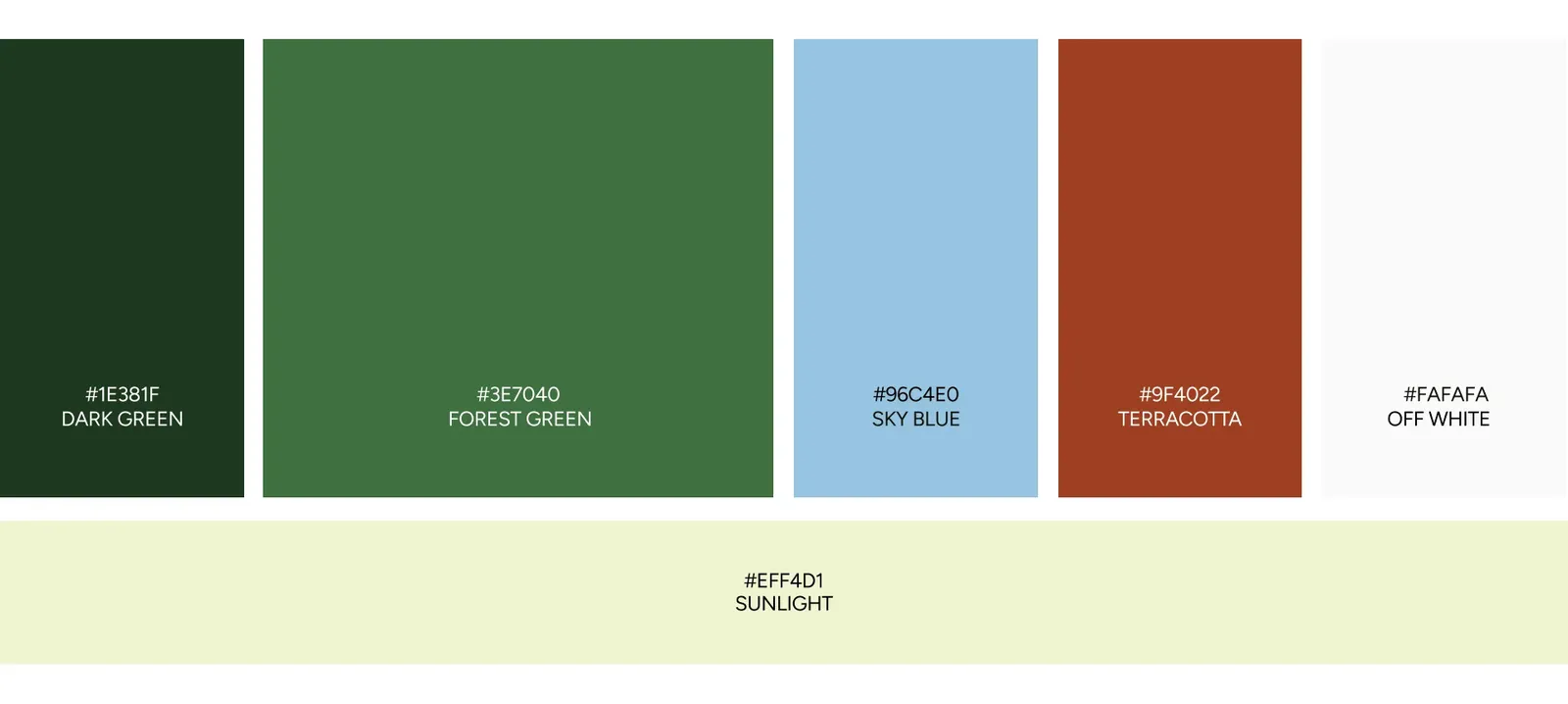
The strategy called for a deep, grounded primary with supporting neutrals and a small set of landscape-derived accents used sparingly.
The final palette delivers that in a very literal, human way:
- Dark Green (#1E381F) + Forest Green (#3E7040): These two greens carry the brand’s weight. They feel stable, institutional, and calm, closer to infrastructure and systems than “campaign”. That aligns directly with the principle of Infrastructure, not charity (serious, engineered, built to last). Practically, they also perform well as foundations for data overlays, maps, and grid systems, supporting that “data and land in dialogue” spine.
- Sky Blue (#96C4E0): Sky blue functions as the palette’s “breathing space”: it introduces openness and legibility without tipping into generic fintech. It also links neatly to the team’s conversation about perspective, getting away from the default “forest-from-above” competitor cliché and finding a more distinctive vantage point.
- Terracotta (#9F4022): The earth tone keeps Iroko real. It’s the corrective against overly sleek “tech platform” cues, grounding the brand back in land, soil, and place. In the review, the team described the direction as “the green of the trees… the blue of the sky… and the red of the earth”, which became a simple, memorable logic for balancing nature with rigour.
- Off White (#FAFAFA): Off white is the palette’s trust mechanism. It creates clarity, negative space, and an editorial feel, important for reports, governance documents, and data-heavy pages where readability is credibility.
- Sunlight (#EFF4D1): This is the “signal” colour—used with restraint. In the palette discussion, you explicitly called out the need to keep the brand from feeling like hand-drawn exploration alone: there must be a technology layer on top of nature, and a more saturated note can add that “futuristic” edge when used for data emphasis rather than everywhere. The result: a highlight that can bring precision and energy to charts, tags, and moments of interaction, without becoming a loud, generic ecotrope.
Net effect: the palette quietly communicates the brand’s worldview: living systems, structured systems, and transparency between them.
Typography: engineered clarity, with a human edge
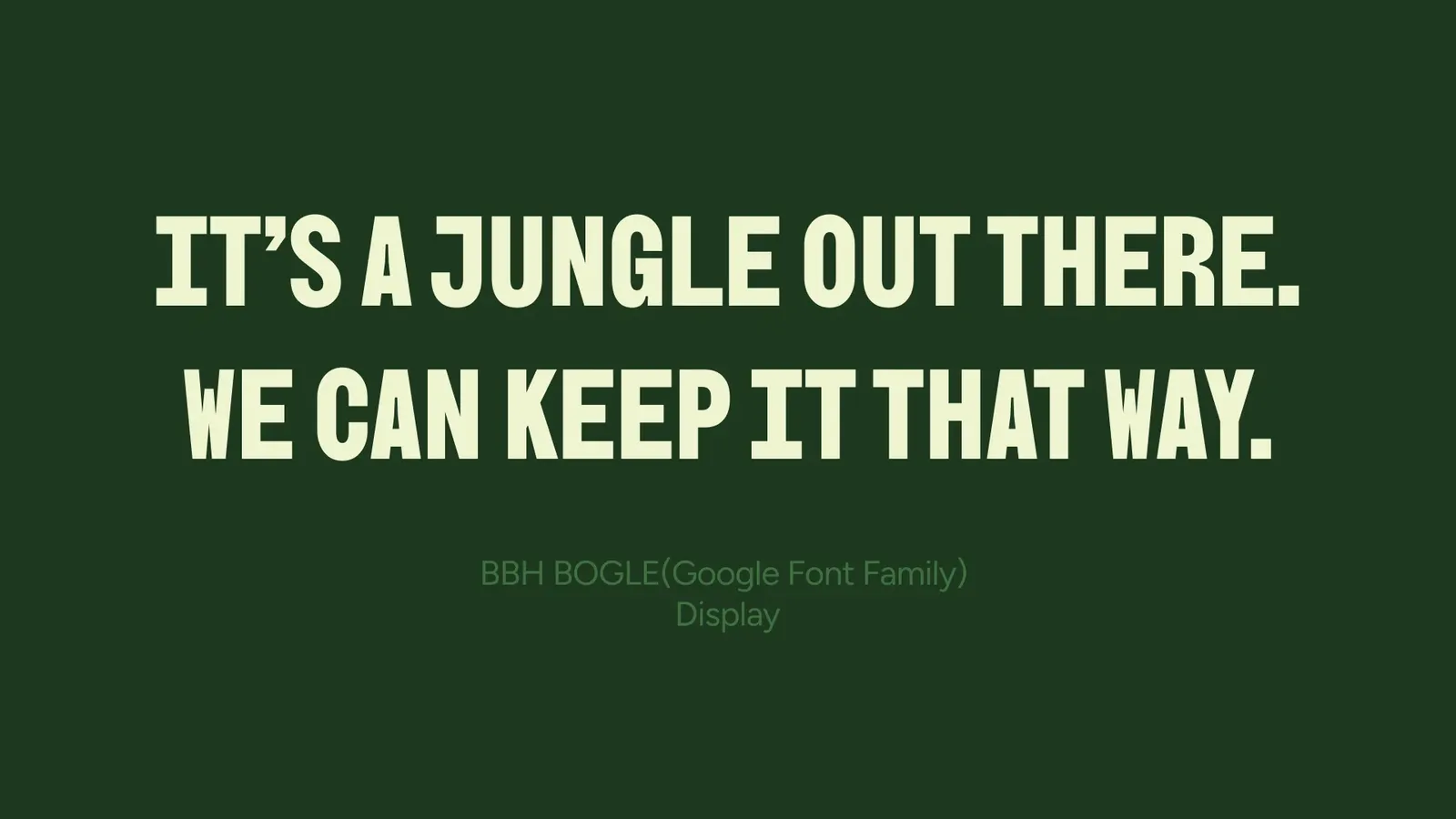
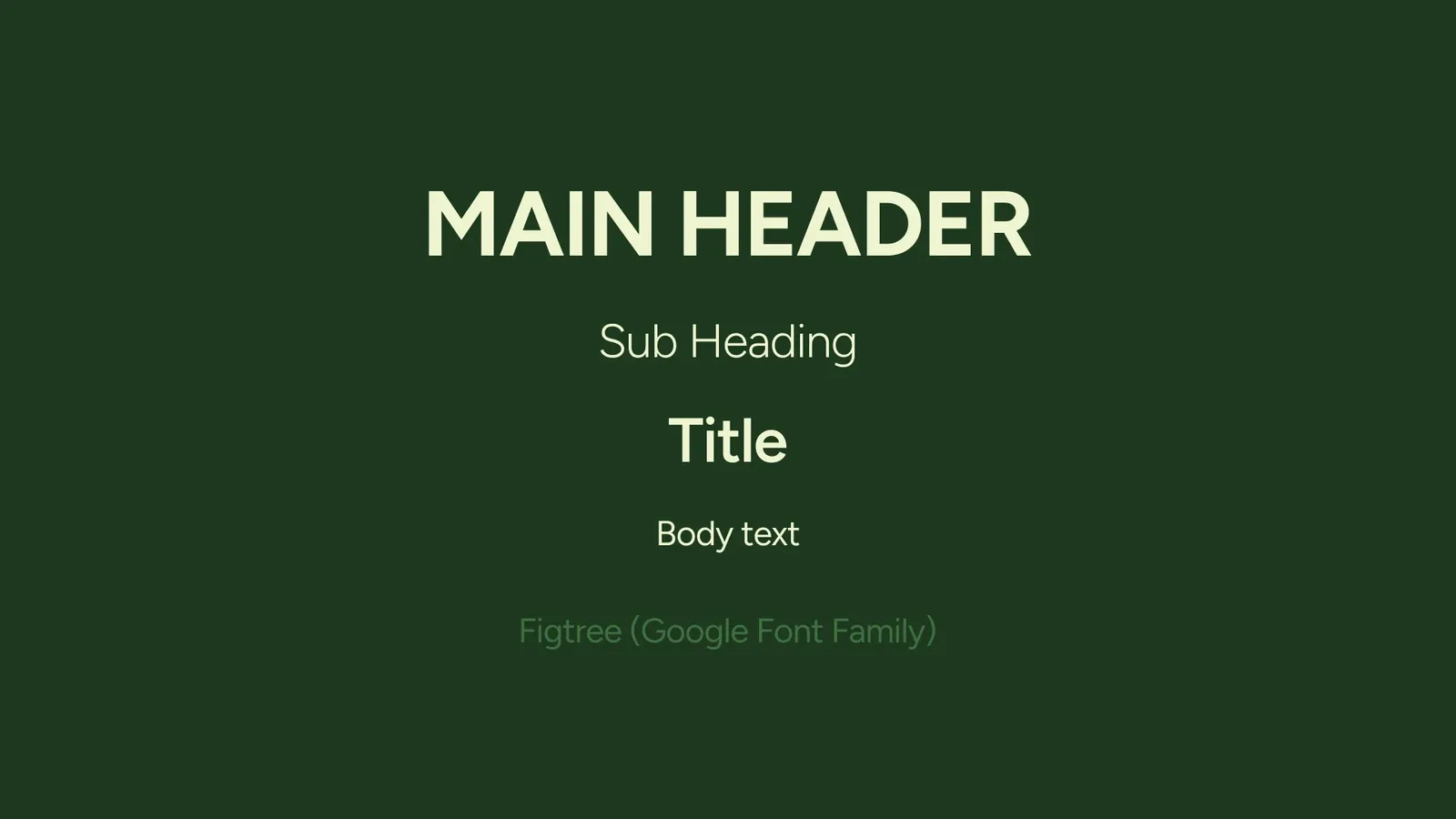
The brand strategy set a clear typographic requirement: modern, serious, legible, with strong numerals for data-heavy layouts, and a hierarchy that keeps headings bold and structural while body text stays comfortable for long reading.
Our final pairing lands that brief:
- Figtree (core workhorse): Figtree does the heavy lifting: body copy, UI labels, captions, data annotations, and report text. It’s contemporary and highly readable, ideal for situations where clarity first is non-negotiable (dashboards, PDFs, slide footnotes, methodology notes). This matters because, for Iroko, precision isn’t aesthetic, it’s trust. The typography has to hold up when the content is technical, scrutinised, and full of numbers.
- BBH BOGLE (display voice): BBH BOGLE is the system’s “declaration” font: it shows up when Iroko needs to sound confident, bold, and unmistakably itself: short headlines, section dividers, rallying lines, and moments where the brand leans into that explorer/wayfinder energy. Crucially, it also supports the tension you were actively managing: don’t go too earthy or “handmade” in typography, use type (and iconography) to bring the technology/infrastructure layer into the same frame as nature.
How the pair works together
- Figtree builds credibility through consistency: long-form legibility, functional hierarchy, and clean number handling for the places Iroko needs to be “audit-ready”.
- BBH BOGLE adds character and conviction: it keeps Iroko from reading like a neutral consultancy or generic climate tech firm, while still feeling disciplined and intentional.
Together, colour + type deliver the supporting promise of the identity system: clarity and trust at every scale. From a single slide headline, to a dense report page, to a data visualisation that needs to be instantly legible.
Outcomes
1) A brand platform that makes Iroko legible — fast
The biggest “outcome” of this work is strategic: we turned Iroko’s lived reality into a clear, ownable category position in a market that’s crowded, confusing, and often mistrusted. The strategy anchors Iroko as a data-first African carbon project developer built for infrastructure-scale delivery, combining rigorous site selection and modelling, community-first economics, radical transparency, and long-term execution.
That clarity is what allows everything else (visual identity, website, decks, reports) to feel consistent and credible, and to speak with authority to the primary audiences: buyers and financiers, without losing alignment with governments and communities.
2) A visual direction with a “nature + system” truth at its centre
The moodboard process wasn’t just aesthetic exploration, it was a tool for finding the right balance point: grounded in landscape and place, but unmistakably powered by technology and process.
The selected territory (“Wayfinding through the Jungle”) gave us a strong foundational metaphor: Iroko as the guide that brings structure to complex terrain. But crucially, the conversation kept steering away from anything that feels hand-drawn, “explorer notebook”, or overly artisanal, because that undermines the technology/infrastructure story.
The team also articulated the need for a controlled “artificial” note. Something that signals data, geometry, and infrastructure without becoming aggressive or drifting into generic tech. That tension directly shaped the final palette logic (earth/forest/sky as the core, with a disciplined accent approach).
3) An identity system designed to avoid the category traps
One of the clearest outcomes is what the identity doesn’t do: it doesn’t borrow from NGO tropes, campaign visuals, or cliché sustainability branding. That boundary was explicit early on (“no NGO… none of the hands with seeds”), and it became a design constraint that improved everything downstream.
Instead, the system is built to feel:
- Slick and trustworthy enough for serious capital and reputational scrutiny
- Rooted in real land + people, without tokenistic “pan-African” decoration
- Clarity-first, so data, maps, contracts, and governance can be communicated without friction
4) A system built for implementation, not just presentation
Beyond the logo, colour, and typography, the work set Iroko up with a repeatable structure for how trust is earned visually: through proof, not poetry.
The strategy explicitly calls for “reasons to believe” artefacts (metrics, case studies, methodology references, transparency templates, and operational track record) surfaced throughout touchpoints rather than buried in appendices.
That means the identity isn’t just a look; it’s a scaffolding for an evidence-led narrative: the kind of brand system that can carry decks, reports, project pages, and governance documentation with the same tone: disciplined, legible, and real.
Learnings & Reflection
1) What you avoid is as important as what you create
Iroko’s strongest creative clarity came from firm “no-go” decisions: no NGO visuals, no sentimental tropes, no generic sustainability iconography. That wasn’t restriction, it was differentiation. Once the team aligned on “slick, trustworthy, ambitious” as the baseline, every design decision had a clearer test.
2) The real creative challenge was the balance point
Again and again, the work returned to the same core tension:
- Too earthy → you risk looking artisanal, quaint, or like a 19th-century explorer’s map.
- Too “data/tech” → you risk looking like a generic platform with no land, people, or place.
The solution wasn’t compromise, it was layering: land as the base reality, with structure and “artificial” signals appearing where they’re functional (charts, mapping, emphasis, wayfinding cues).
3) “Africa, without cliché” takes active design decisions
The team explicitly called out concerns about motifs that can read as tokenistic or “tribal” when used decoratively. That pushed the work toward something more respectful and specific: real landscapes, real infrastructure, real documentation, and cultural references only when they’re meaningful and contextual.
This is a useful reminder that authenticity isn’t achieved by adding more signifiers, it’s achieved by being precise about which realities you’re representing.
4) Credibility is created through systems, not slogans
The most durable “trust lever” for Iroko is transparency: showing workings, showing governance, showing how value moves. That’s why the identity needed to be built to hold dense information (maps, tables, contracts, methodologies) without getting decorative.
The strategy’s emphasis on repeatable proof points (metrics, case studies, transparency artefacts, endorsements) is a practical blueprint for how the brand earns confidence over time, especially as projects mature.
5) The best brands behave consistently in every room
A line we kept coming back to was the need to be credible in global finance contexts and respectful and understandable in on-the-ground settings. That’s not a copy line, it’s a design requirement that touches typography, layouts, photography choices, and how plainly you explain the economics.
Closing Reflection
This project reinforced a simple truth: for mission-led organisations operating at high financial and political stakes, branding isn’t “making it pretty”. Branding is operational clarity made visible. A system that helps the right people trust you, understand you, and work with you at scale.